What Is the Fast of the Tenth of Tevet?
The fast marks the beginning of the siege of Jerusalem and calls for reflection and change.
In brief
- Public fasts are meant to inspire repentance and a change in behavior.
- The tenth of Tevet marks the start of the Babylonian siege of Jerusalem.
- The siege was the beginning of the events that led to the destruction of the First Temple and exile.
- Some authorities say the fast would be observed even on Shabbat if the two coincided.
Our teachers write that public fasts were established not simply to commemorate tragic events in our people’s history, but to inspire us to abandon the sins that once led to those events, learn from the past, and choose a good path that brings us closer to the Creator (Maimonides, Laws of Fasts 5:1; Chatam Sofer, Orach Chaim 208).
Scripture tells us that God sent the prophet Jonah to call on the people of Nineveh to return urgently to the right path. Otherwise, the entire city would be overturned. The people listened to the prophet, put on sackcloth, repented, and fasted. The Creator accepted their repentance. As the verse says, “God saw their deeds” (Jonah 3:10). It does not say, “God saw their sackcloth and their fasting,” but “God saw their deeds.” From this, the Sages conclude that the purpose of a fast is not a formal expression of grief, but deep reflection and action to change the way we live (Taanit 15a).
This is also the purpose of the fast of the tenth of Tevet, one of the four public fasts mentioned by the prophet: “Thus said the Lord of Hosts: The fast of the fourth month, the fast of the fifth, the fast of the seventh, and the fast of the tenth” (Zechariah 8:19). These are the fasts of the 17th of Tammuz, Tisha B'Av, Tzom Gedaliah (the Fast of Gedaliah), established for the day after Rosh Hashanah, and the tenth of Tevet (Rosh Hashanah 18b). On this day, we must examine our actions with particular seriousness and consider how we can become better and more whole. In this way, we can turn the day that marked the beginning of great suffering and tragedy into the beginning of a great deliverance from evil and exile (Mishnah Berurah 549:1).
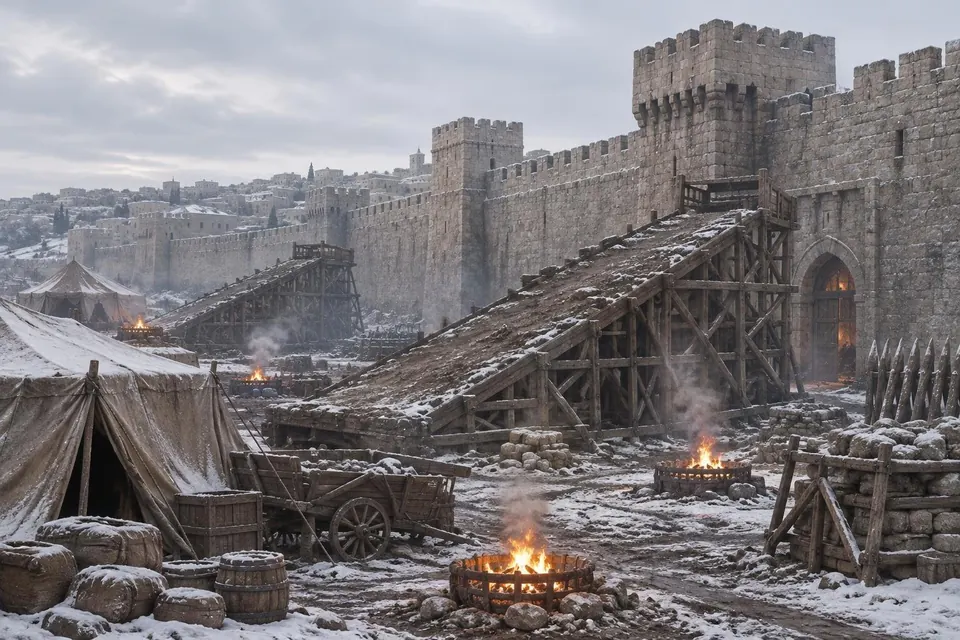
On 10 Tevet 3338, counting from the creation of the world, the Babylonian king Nebuchadnezzar began a siege of Jerusalem, intending to capture and destroy it (Megillat Taanit). The tenth of Tevet never falls on Shabbat. But according to some opinions, if it did, the fast would not be moved to a weekday, as the other fasts mentioned by the prophet are. A hint of this distinctive feature appears elsewhere in the Prophets: “on this very day” (Ezekiel 24:2). From this, we learn that the fast cannot be moved to another day (Minchat Chinuch, commandment 301; Rabbi Chaim Soloveitchik, Stencil, Rosh Hashanah 44). It is the only one of the four fasts mentioned by the prophet for which a specific date is given. The others are named by the number of the month, without a day of the month.
Our teachers explain that the fundamental difference between the fast of the tenth of Tevet and the other fasts is that the siege of Jerusalem on that day was the beginning of the destruction of the First Temple, the deaths of hundreds of thousands of people, and our people’s 70-year Babylonian exile (Yaarot Devash, vol. 1, sermon 2, p. 534, and vol. 2, sermon 12; Torat Moshe, vol. 2, Vayikra, Drush leShiva beAdar; Bnei Yissachar, Kislev-Tevet 14). A beginning always plays a particularly important role, as we see in the Talmud (see, for example, Taanit 29a).
We can also learn about the special significance of the fast from the Midrash. It says that the Jewish people were supposed to go into exile on the tenth of Tevet, but God, in His great mercy, moved the appointed time from the cold and rainy season to a dry and warm time of year (Tanchuma, Tazria 9).
The Sages say that the destruction of the Temple became possible only when its inhabitants began to violate the laws of Shabbat (Shabbat 119b). Our teachers write that this is another reason we would have to fast on Shabbat if the tenth of Tevet fell on that day: to atone for the violations of Shabbat that allowed Nebuchadnezzar to capture Jerusalem (Chatam Sofer, Drush leChodesh Tevet).
Keep reading
More →
Why Did Rabbi Akiva Laugh at the Temple Ruins?
Tisha B'AvCan Freely Given Love Heal Baseless Hatred?
A Midrash about Rachel’s plea helps explain how love can repair the damage caused by hatred.
Guide · Tisha B'AvShowering and Bathing During the Nine Days
Customs differ, and the restriction on washing applies to washing for pleasure.
Guide · Tisha B'AvThree Weeks Laws: What Is Forbidden?
- The Fast of the 17th of Tammuz
- Mourning Laws Beginning on the 17th of Tammuz
- An Unfavorable Period







