Why Is Elijah Present at a Brit Milah?
The Zohar tells how Elijah came to be present at every circumcision.
In brief
- A declaration at circumcision addresses Elijah as the angel of the covenant.
- The Zohar connects Elijah’s role to the covenant he once defended as Phinehas.
- Moses advised Elijah to go wherever the mitzvah of circumcision is performed.
- The Zohar’s account explains why Elijah is present at every circumcision.
Parashat Pinchas#
At a circumcision, these words are recited: “Elijah, angel of the covenant of circumcision, messenger of the covenant, what is yours is before you.”
Where do these words come from? Does the baby belong to the prophet Elijah?
The Zohar (Ki Tisa, 190a) tells of the prophet Elijah resting in the shade of a rotem (רתם, a broom tree) on his way to Mount Sinai. The tree is known for its coals, which retain their heat for a long time. Elijah turned to the Creator and said:
“Master of the universe, the prophetess Deborah once led the people of Israel, judging them as she sat beneath a date palm, a tomer (תמר). The words תמר (tomer, palm) and רתם (rotem, broom tree) contain the same letters in a different order. That prophetess was able to stir the people of Israel to repentance, as it is said: ‘Village life ceased in Israel, ceased, until I, Deborah, arose, arose as a mother in Israel’ (Judges 5:7). And it is said of Deborah afterward: ‘My heart is with Israel’s leaders, who volunteered among the people. Bless God’ (Judges 5:9). Like the prophetess Deborah, I urged the people of Israel to change their ways in Your name, but I could not move them to repentance. So I sit here beneath a rotem, whose name has the same letters as the name of Deborah’s tree, and I call out to You.”
Then God revealed Himself to Elijah and said:
“Long ago, when you were known as Phinehas, you denounced the act of Zimri, son of Salu, who had defiled My covenant of circumcision. [This covenant includes the prohibition against defiling oneself through forbidden sexual relationships and the like.] Until then, Moses had been responsible for preserving the holiness of My covenant. But after that act, you became its guardian [and were therefore granted a special experience of the Shechinah, God’s divine presence], and Moses agreed. Your zeal was appropriate then. But now, during the reign of King Ahab, when the entire responsibility for preserving the holiness of My covenant rests with you, you should not have treated the people’s offenses with the full severity of a zealot. You should have set anger aside, as I did.”
When Elijah felt that God was taking away his role as the bearer of the holiness of the covenant with the Creator, he decided to go to Mount Sinai. He hoped to meet the soul of Moses there and that Moses would help him regain the presence of the Shechinah that he had lost.
But Moses replied that he could not restore that privilege to Elijah, because it was no longer his to grant. He did, however, offer the prophet advice: Elijah should go wherever the mitzvah of circumcision is performed. Because this mitzvah is an acceptance of the covenant of circumcision, the manifestation of the Shechinah associated with the covenant with the Creator is always awakened there. And there Elijah can always experience, in part, the presence of the Shechinah that he lost.
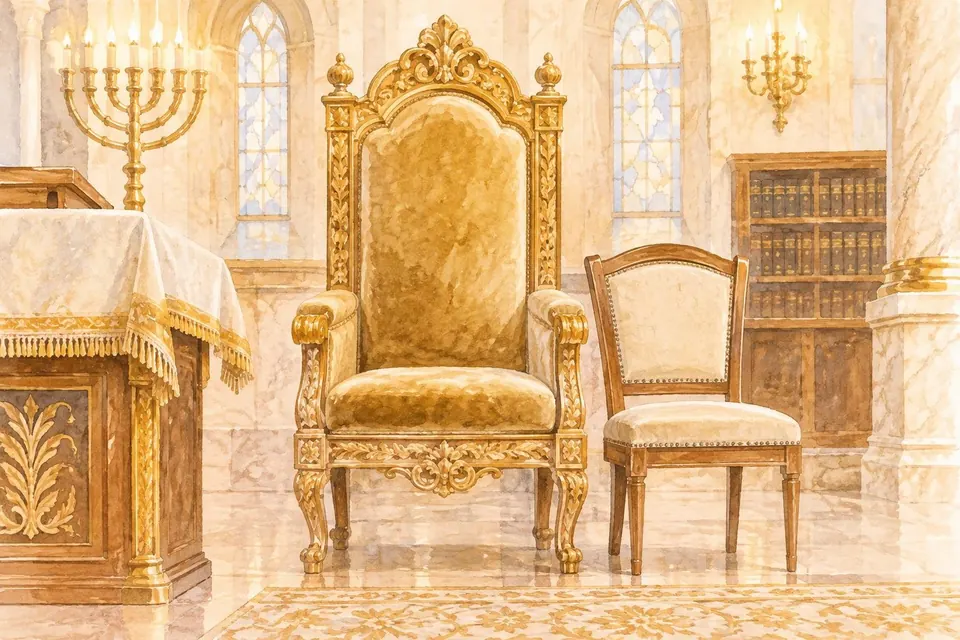
Ever since, the prophet Elijah has been present at every circumcision ceremony, and each time Jews proclaim: “Elijah, angel of the covenant of circumcision, what is yours is before you.”
By Rabbi Nachum Shatkhin
Keep reading
More →The Baruch Sheptarani Blessing at a Bar Mitzvah
- The Importance of the Day
- Early Sources for the Blessing
- What Does the Blessing Mean?
Why Aren't Jews Born Circumcised?
A teaching on Parashat Vayera explores circumcision as an opportunity to take part in our own perfection.
Life CycleAre Marriages Made in Heaven?
Jewish sources explore destined partners, the power of prayer, and the role of free choice in marriage.
Guide · Life CycleAre Birthday Celebrations Permitted in Judaism?
- Is It Better to Have Been Created?
- Good Fortune on a Birthday
- Birthday Celebrations: Arguments for and Against







