Blessings for Thunder, Lightning, Rainbows, and Earthquakes
When and how to say blessings over natural phenomena.
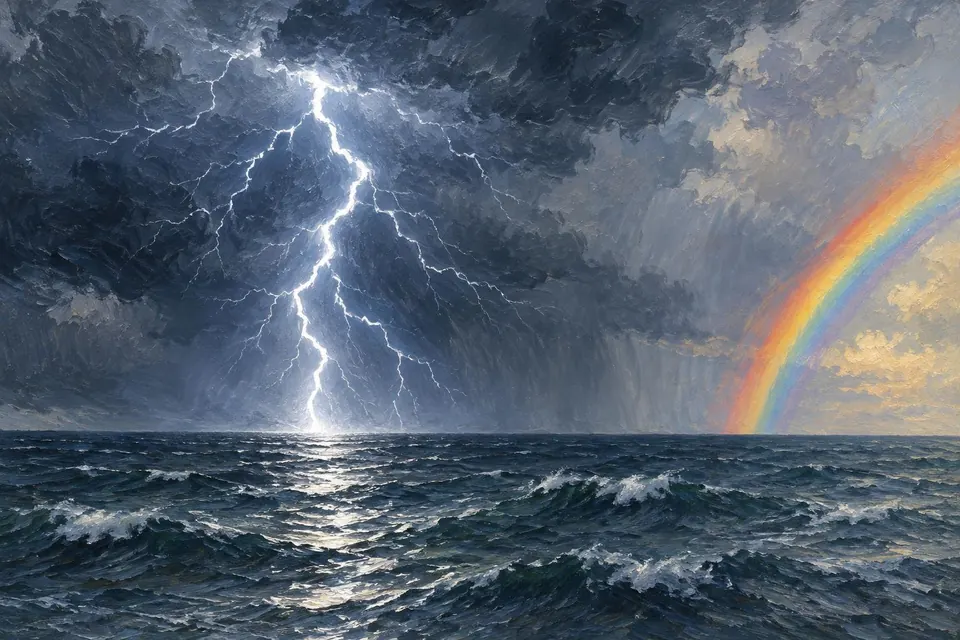
In brief
- Either of two blessings may be said over thunder or lightning.
- A blessing is said over a rainbow in the clouds, but not one over a waterfall.
- Either blessing for thunder and lightning may also be said when an earthquake is felt.
- The editors recommend saying prayers and blessings in Hebrew.
A Note From the Editors#
According to the letter of the law, prayers and blessings may be said not only in the holy language, Hebrew, but also in any other language the person saying them understands. It is important, however, to say all the words correctly. The Mishnah Berurah writes that in practice, translating sacred texts presents several difficulties. Some Hebrew words have several meanings and shades of meaning, making it nearly impossible to find equivalent words in another language. The meanings of some words are not entirely clear, which also makes them difficult to translate accurately.
Hebrew is the holy language through which God created the world. In this language, He revealed the Torah to His prophets. It is therefore preferable to use it. We provide translations of the blessings to help our readers understand their meaning, but we recommend praying and saying blessings in Hebrew.
Thunder and Lightning#
The Shulchan Aruch writes that someone who sees lightning or hears thunder should say the blessing:
בָּרוּךְ אַתָּה ה' אֱ-לֹהֵינוּ מֶלֶךְ הָעוֹלָם, עוֹשֶׂה מַעֲשֶׂה בְּרֵאשִׁית.
Blessed are You, Lord our God, King of the universe, who makes the works of creation.
Alternatively, one may say:
בָּרוּךְ אַתָּה ה' אֱ-לֹהֵינוּ מֶלֶךְ הָעוֹלָם, שֶׁכֹּחוֹ וּגְבוּרָתוֹ מָלֵא עוֹלָם.
Blessed are You, Lord our God, King of the universe, whose strength and power fill the world.
According to the law, either blessing may be said over thunder or lightning, but only one of them.
The common custom is to say “who makes the works of creation” over thunder and “whose strength and power fill the world” over lightning. Someone who accidentally said the other blessing has fulfilled the obligation and should not repeat it.
Even someone who sees only the reflected light of the lightning, rather than the lightning itself, should say a blessing. A blessing should also be said over lightning so distant that the thunder cannot be heard at all. A blessing may be said, however, only if one is certain that it is lightning, not the light of a spotlight or some other source. The same applies to thunder: if one is not sure that the rumbling is thunder, no blessing may be said over it.
The blessing should be said over the first lightning seen and the first thunder heard that day. It is a mistake to wait for the storm to come closer and the thunder and lightning to become stronger: the obligation to say a blessing arises as soon as the first lightning appears and the first thunder is heard.
As far as the laws of blessings are concerned, there is no connection between thunder and lightning. Someone who sees lightning should therefore not wait for thunder, but should say the blessing over the lightning immediately. Then, upon hearing thunder, they should say the blessing over the thunder. If thunder sounds while they are saying the blessing over the lightning, they should say the blessing over the thunder immediately after finishing it. If the thunder sounds before they have said the words “Blessed are You, Lord,” however, that blessing covers both the lightning and the thunder, and a second blessing may not be said.
Usually, the blessings over thunder and lightning are said once a day. But if the sky clears completely after a storm and clouds gather again that same day and another storm begins, the blessings over thunder and lightning should be said again.
Rainbows#
Someone who sees a rainbow should say:
בָּרוּךְ אַתָּה ה' אֱ-לֹהֵינוּ מֶלֶךְ הָעוֹלָם, זוֹכֵר הַבְּרִית וְנֶאֱמַן בִּבְרִיתוֹ וְקַיָּם בְּמַאֲמָרוֹ.
Blessed are You, Lord our God, King of the universe, who remembers the covenant, is faithful to His covenant, and keeps His word.
This applies specifically to a rainbow that appears in the clouds. The blessing should not be said over a rainbow of the kind often seen above large waterfalls. It is forbidden to gaze intently at a rainbow because it is a symbol of God’s glory. Nevertheless, someone who sees one should say the blessing.
The rainbow is a reminder of the destruction of the world during the Flood and a sign that, were it not for God’s promise, the world would deserve to be destroyed. Therefore, someone who sees a rainbow should not tell others about it. But if someone asks whether there is a rainbow, one may answer that there is.
Someone who wants to see a rainbow in order to say the blessing may look for one in the sky; there is no prohibition against doing so.
Earthquakes#
Someone who feels an earthquake should say:
בָּרוּךְ אַתָּה ה' אֱ-להֵינוּ מֶלֶךְ הָעוֹלָם, עוֹשֶׂה מַעֲשֶׂה בְּרֵאשִׁית.
Blessed are You, Lord our God, King of the universe, who makes the works of creation.
Alternatively, one may say:
בָּרוּךְ אַתָּה ה' אֱ-לֹהֵינוּ מֶלֶךְ הָעוֹלָם, שֶׁכֹּחוֹ וּגְבוּרָתוֹ מָלֵא עוֹלָם.
Blessed are You, Lord our God, King of the universe, whose strength and power fill the world.
The blessing is said even if the earthquake was very slight. If it was strong, it is preferable to say “whose strength and power fill the world.”
The blessing should be said while the movement of the ground is being felt or within a few seconds afterward. Once the earthquake has ended, the blessing may no longer be said over it. Only one blessing should be said over tremors that follow one another. But if the earthquake stopped and then started again after a short time, another blessing is required.
In memory of Rabbanit Gita Leah Zilber.
Practical law. This page reports a ruling given for a specific question. For your own situation, ask a rabbi who knows you.
Keep reading
More →Hebrew Words for Prayer in the Haggadah
Three Hebrew words describe cries that rise to God when ordinary words fail.
ParashaKorach: The Power of Prayer
Why did Moses pray that God would not hear the prayers of Korach and his followers?
ParashaPinchas: The Trap of Routine
The daily offering teaches us to bring fresh attention and inspiration to familiar mitzvot.
PrayerCleansing the Soul Before Sleep
A bedtime prayer and other practices can help us release resentment and begin again.







