Purim: The Hidden Miracle
The story of Purim reveals how God can work miracles through the ordinary course of events.
In brief
- The Sages connect the merit of the Omer offering with the Jewish people's rescue from Haman.
- The Omer helps people recognize God's hand in nature.
- The events of Purim unfold naturally, yet their intricate connections reveal divine providence.
- Haman's plans repeatedly turn against him, including the lot he cast.
The Talmud tells us (Megillah 16a):
Haman took the robe and the horse and went to Mordechai. He found the Sages sitting before Mordechai and asking him about the laws of kemitzah, the handful a kohen, or priest, separates with three fingers from the dough of a meal offering and burns on the altar. Rashi explains that they were discussing the Omer offering, which was brought on the second day of Passover. When Mordechai saw Haman, he was afraid, thinking that Haman had come to kill him. He rose, wrapped himself in a tallit (prayer shawl), and began to pray. Haman asked him, “What are you doing here?” Mordechai answered, “When the Temple stood, a person who brought a meal offering to the Temple would give a handful of fine flour and atone for his sin.” Haman said, “Your handful of flour has overcome my 10,000 talents of silver, which I wanted to pay Ahasuerus for you.”
The Midrash says (Yalkut Shimoni 643):
“Never take the mitzvah of bringing the Omer lightly. Rabbi Levi said: The merit of keeping this mitzvah saved them in the days of Haman.”
What is the connection between the Omer offering and the story of Haman? Were the Jews saved through this merit simply because these events took place at the time the Omer was brought? The Maharal of Prague wrote in his book Or Chadash that this is a very profound question. Even so, let us try to understand it.
What Miracles Teach#
Maimonides (the Rambam) wrote (Laws of the Foundations of the Torah 8:1):
“The people did not believe in the truth of Moses' prophecy because of the miracles he performed. Someone whose belief rests on signs still has doubts in their heart, for perhaps the sign was produced through sorcery! It turns out that such faith is not lasting; it always remains subject to reconsideration and doubt.”
It follows that miracles are useful only to those who already believe. Someone who does not want to believe will always find a plausible explanation even for the most obvious miracles.
Consider Rashi's commentary on the building of the Tower of Babel (Genesis 11:1): “They said: Every 1,656 years the heavens collapse, as they did at the time of the Flood.” They explained even the Flood in terms of natural laws.
Only a person who sees nature itself as a hidden miracle is shown open miracles to help strengthen their faith. That is why miracles occurred constantly in the First Temple, and later happened to particular individuals, such as Rabbi Chanina ben Dosa and others like him.
In fact, other people are shown miracles too, but these are veiled by the phenomenon we call “nature.” These are hidden miracles. They, in turn, fall into two categories: those that are more apparent and those that are more concealed.
In the more apparent miracles, we can see God's guidance: how He directs the causes of events, and the causes behind those causes, so that they all lead to the desired result. When we look at what happened, we cannot say that it all came about by chance, just as we cannot say that the way the parts of a working machine fit together is a matter of chance.
When a person notices this, they are filled with joyful wonder: they have seen God's work with their own eyes. Although everything happened according to natural laws, they can still sense the Creator's presence in it.
A completely hidden miracle, on the other hand, is what we call a “natural event,” the kind we are so accustomed to seeing. Because of that familiarity, and because we see nothing new in these events, they stir no feelings in us, and their true causes remain completely hidden.
A person who sees the Creator's hand even where it is completely concealed becomes worthy of witnessing more apparent miracles as well. In this way, they continually deepen their understanding of God through the world around them. They keep discovering the hidden meaning of events and, through this, become worthy of ever greater revelation.
The Meaning of the Omer Offering#
The Omer offering helps us see God's work in nature itself. The Midrash says (Yalkut Shimoni 643):
“Rebbe said: The ordinary way of the world is that a person buys a portion of meat at the market and then must make a considerable effort to prepare it as food. By contrast, while people sleep in their beds, God sends clouds, grows plants, and nurtures fruit. And all that people give Him in thanks is the Omer offering. Rabbi Pinchas said: A person who washes clothes in the rainy season must make a considerable effort to dry them. By contrast, while people sleep in their beds, God sends a gentle wind and dries the earth.”
The Maharal offered an original explanation of this Midrash:
“At a time when there were no open miracles in the world and everything happened according to the laws of nature, the merit of the mitzvah of the Omer offering saved the Jews of Ahasuerus' time. For the Omer leads a person to think about the Creator and to recognize that nature does not exist independently, but is under God's complete control.”
In other words, they recognized that even what is completely concealed by the natural course of events is the Creator's work. This led to a revelation that made it clear that natural events are directed by a Higher Power.
The Maharal concludes:
“For this reason, none of God's sacred Names that may not be erased appears even once in the Book of Esther. For it speaks only of natural events, and His Names that perform miracles are not revealed there; the book only alludes to them.”
In other words, there was nothing supernatural about the miracle of Purim; it was concealed by nature. Yet we can see the miracle when we consider providence's apparent intervention in the events of Purim.
What the Book of Esther Reveals#
What a remarkable revelation emerged from entirely natural events! Let us look at the course of events as the Book of Esther describes them.
The first series of events: Ahasuerus' feast, Vashti's removal, and Esther's coronation. Esther comes to the king and invites Haman to a feast.
The second series of events: The plot of Bigthan and Teresh; Mordechai's discovery of it; Esther's report to the king in Mordechai's name; and the king's sleeplessness.
The third series of events: The king promotes Haman, and everyone bows and prostrates themselves before him. Mordechai is at the court and does not bow to Haman. Haman comes to the king to obtain permission to hang Mordechai.
The second and third storylines reach their conclusions on the same night and become intertwined. The events of the second series reverse the meaning of the third, thanks to the events of the first—like a machine in which the movement of every part has been planned in advance.
The Sages said that, for the people of Israel, God prepares a way out of a difficult situation before He creates it [Megillah 13b]. In Or Chadash, the Maharal explains the meaning of this principle:
“For the people of Israel, the ultimate goal is deliverance, and all events lead only to it. This includes the misfortune itself: it exists only to bring about deliverance in the end. The reason is that the role of the people of Israel in this world is to reveal God's glory. Therefore, the ultimate purpose of any concealment associated with them is to prepare the ground for revelation. It is like the darkness of evil, which was created only to be dispelled by the light of a righteous choice made by a person.”
Yet this special rule governing the fate of the Jewish people—that deliverance begins before misfortune appears—is itself concealed by the natural course of events.
The Sages said (Yalkut Shimoni, Samuel 127):
“God gave Mordechai a hint, and he sensed it. Mordechai said: Could it be that such a righteous woman would marry this uncircumcised wicked man? Apparently, something is going to happen to the Jewish people, and they will be saved only with her help.”
This, too, is part of the unfolding events we are considering: the “machine” did not lack even this seemingly minor detail.
The Reverse#
Another pattern runs throughout the Book of Esther: “The reverse happened” (Esther 9:1). Haman wanted to destroy all the Jews, but the reverse happened. On the day Haman himself had appointed, the Jews destroyed all their enemies in all the provinces of the Persian kingdom.
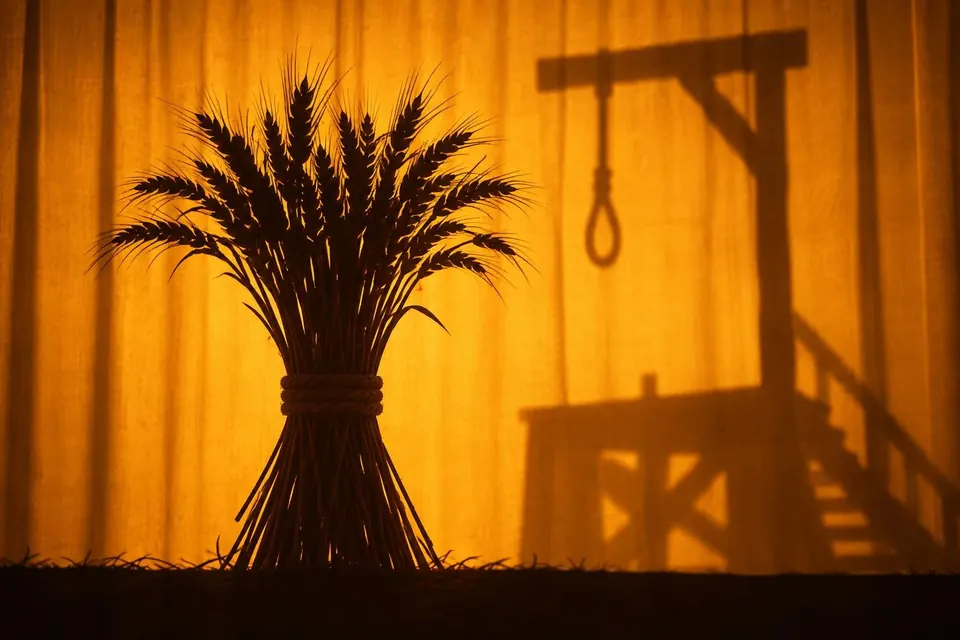
Haman wanted to hang Mordechai, but the reverse happened: on that very day, he was forced to lead Mordechai on the king's horse. Haman prepared a stake on which to hang Mordechai, but again the reverse happened: Haman himself was hanged on that very stake.
The Sages said (Megillah 16a), regarding the words “to speak to the king about hanging Mordechai on the stake that he had prepared for him” (Esther 6:4): The word lo, “for him,” can also refer to Haman himself—he had prepared it for himself. Rashi explains: “He prepared it for himself.”
The Maharal explains:
“What is meant here is that this was Haman's very nature: everything he intended to do to Mordechai turned against him. From the outset, events unfolded in such a way that they would turn against him, and this reveals to us the miraculous character of those events. For he intended to destroy the Jews, but their existence depends on God Himself; consequently, it is utterly impossible to destroy them. That is why all his plans turned against him. It is like a person throwing a stone with great force at an iron wall, hoping to knock it down, only for the stone to bounce straight back at the one who threw it.”
There is another astonishing pattern: every defeat Haman suffered was his own doing. He got rid of Vashti, and that led to Esther's coronation. As the Sages said in Megillah 12b, Memuchan, who advised Ahasuerus to have Vashti killed, was Haman himself.
Haman himself decided what honors should be given to a person the king wished to reward—and he himself was forced to carry out his decision and honor Mordechai. He erected the stake on which he himself was hanged.
The Sages tell us even more in the Midrash (Yalkut Shimoni, Esther 1059):
“This wicked man summoned his servants and ordered them: Find me a stake 50 cubits high, so that it can be seen throughout the city. They answered Haman: Where will we find you such a stake if not in your own palace? Without a second thought, Haman went and broke apart his balcony, took the beam he needed, and brought it out. He measured the beam against his own body. The angel Gabriel said: This stake suits you very well; it has been prepared for you since the six days of creation.”
How astonishing and wondrous! Haman broke apart his balcony to extract a beam that had been prepared especially for him from the beginning of creation—so that he himself would be hanged on it. What is more, he measured it against himself to imagine what it would be like to be hanged on that beam. Of course, he wanted to imagine Mordechai being hanged on it. But the reverse happened: Haman himself was hanged. The imagined scene became fact, for he was hanged, and so he had prepared everything with his own hands. Can such a pattern be explained by random coincidences?
The Lot#
Now let us think about the lot Haman cast. A lot never falls by chance; its result is certainly determined from above. “The lot is cast into the lap, but its every decision is from God” (Proverbs 16:33). Because a person relies on the lot, it is clear that what it shows them will be determined from above. The result of a lot is never a matter of chance.
Haman knew this secret, so he relied on a lot. He also knew that a lot shows the true answer only to someone who genuinely and sincerely wants it, with no preference about the outcome. Someone who hopes for a particular answer will certainly receive it, for “a person is led along the path they wish to take” (Makkot 10b).
The Maharal says in Or Chadash:
“It is written (Esther 3:7), ‘The pur, the lot, was cast before Haman.’ Haman did not cast the lot himself. As an interested party, he knew that the lot would show him what he wanted to see. So it was cast by another person who had no stake in the matter, in order to obtain a reliable result.”
But it did not work, because the person he appointed also hated the Jews, and the lot showed him not the true result but the one he wanted.
This comes under the principle, “With the crooked, You act in a way that thwarts them” (2 Samuel 22:27): a person whose desires are contrary to the truth is shown the falsehood they seek. But even when a lot is used falsely, an element of truth remains in it. We can see this in what the lot showed Haman: it did not reveal the future fate of the Jews. Instead, he saw his own fate, and that was the element of truth.
As the Midrashim say: “The lot concerned him himself”; “Your lot is hanging” (Esther Rabbah 7:11); and “You are the lot of My children” (Yalkut Shimoni, Esther 1054). In other words, the lot you cast to decide the fate of My children actually concerns you. Haman received an extraordinarily precise answer from above, but according to the principle of reversal. Every detail was carefully calculated, and each took its place and fulfilled its role flawlessly. Can we imagine a clearer revelation of providence?
Haman was hanged on 16 Nisan, the day the Omer is brought. This teaches us that there are hidden miracles and shows us that what is completely concealed and what emerges from concealment are, in truth, equal. Both are genuine miracles. That is why there was such a subtle correspondence between the events.
Ponevezh Yeshiva, Bnei Brak, Wednesday of the week of Parashat Tetzaveh, 5713 (February 25, 1953)
Keep reading
More →Why Did Mordechai Refuse to Bow to Haman?
Mordechai’s choices in the Purim story reveal his understanding of spiritual and material effort.
PurimPurim, Lots, and the Meaning of Chance
The name Purim invites us to consider the difference between chance and divine providence.
PurimWhy Do Jews Drink on Purim?
The Talmud’s teaching about drinking on Purim has inspired different interpretations and a reflection on closeness to God.
Guide · PurimIs It Permissible to Wear Costumes on Purim?
The reasons for Purim costumes and the boundaries Jewish law places on them.







