Chayei Sarah: A Warm Welcome Matters More Than Gifts
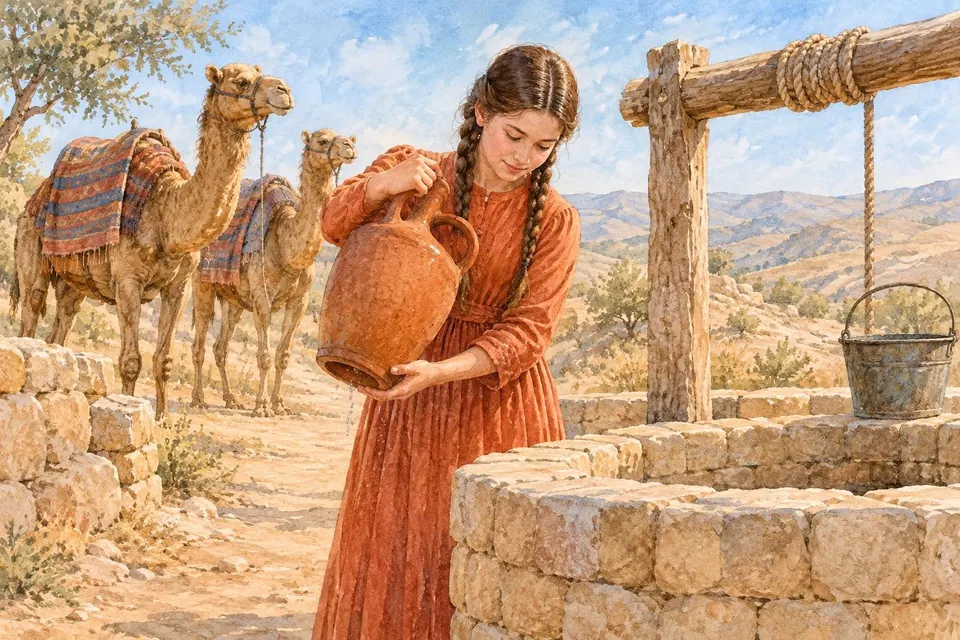
Rebecca’s kindness to Eliezer shows how generosity begins with attention to another person’s feelings.
In brief
- Rebecca offered water to Eliezer before offering to water his camels.
- Kindness means considering how to make another person feel comfortable.
- Shammai and Maimonides emphasize the importance of giving and welcoming others warmly.
- Rabbi Chaim Kreiswirth took care to spare people in need additional embarrassment.
Daily Quote#
Rabbi Yishmael says: Be yielding toward a person of importance and pleasant toward a young person, and receive everyone with joy.
Pirkei Avot (Ethics of the Fathers), Mishnah Avot 3:12
Parashat Chayei Sarah#
“Let the young woman to whom I say, ‘Please lower your pitcher so that I may drink,’ and who says, ‘Drink, and I will also give your camels water,’ be the one You have chosen for Your servant Isaac” (Genesis 24:14).
True kindness is not just giving someone what they ask for. It also means recognizing a need on your own and meeting it. That is why Eliezer wanted the young woman not only to respond to his request, but also to recognize his additional need—to give water to his camels—and offer to do so.
Rebecca’s actions, however, were wiser than Eliezer’s plan. First, she offered water only to Eliezer. Only after he had satisfied his thirst did she offer to water the camels. She did this for two main reasons: so as not to put him on the same level as the camels, and so that Eliezer could drink in peace, without rushing. Had Rebecca mentioned from the start that she also intended to water the camels, Eliezer would have rushed to finish his drink so as not to keep the kind young woman waiting.
We can learn an important lesson from this: Kindness is not limited to meeting someone’s minimum needs. It requires thought. How can we make the other person feel comfortable?
Shammai says in Pirkei Avot, “Receive everyone with a pleasant expression” (Mishnah Avot 1:15). Drawing on Shammai’s words, our Sages taught: “If a person gives another the finest gifts in the world with an unfriendly expression, it is as though they gave nothing. But one who receives another person warmly and graciously, even if they give nothing, is as though they gave them the finest gifts in the world” (Avot deRabbi Natan 13).
Maimonides (the Rambam) writes about the proper way to give tzedakah, or charity: “Whenever a person gives tzedakah with an unpleasant expression or looking at the ground, they lose their merit, even if they give a poor person 1,000 gold coins. Instead, when giving tzedakah, they should do so with a pleasant and joyful expression, … share in the poor person’s sorrow over their troubles, … comfort them, and express sympathy” (Maimonides, Laws of Gifts to the Poor 10:4).
A story is told about the great Torah scholar Rabbi Chaim Kreiswirth, who also distributed large amounts of tzedakah. He always tried to visit people in need himself to give them money. If they came to him like people begging for alms, they would feel additional shame. When he could not visit a poor person, he gave them money for a taxi, saying, “You’re doing me a true kindness by giving me the privilege of helping you, so your visit should be at my expense.”
By Rabbi Reuven Kuklin
Keep reading
More →Vaera: The Soccer Player and the Magician
A story about a soccer player helps explain why seeing something can affect us more deeply than knowing it.
CharacterLashon Hara and Free Speech: Life and Death in the Tongue
Jewish teachings on the power of speech challenge us to consider how we use our words.
ParashaBehaalotecha: What Makes a Response to Tragedy Cruel?
Maimonides calls it cruel to dismiss communal tragedy as simply part of life.
ParashaKorach: Who Wins an Argument?
Moses’ response to a painful accusation offers a lesson in walking away from conflict.







