Behaalotecha: What Makes a Response to Tragedy Cruel?
Maimonides calls it cruel to dismiss communal tragedy as simply part of life.
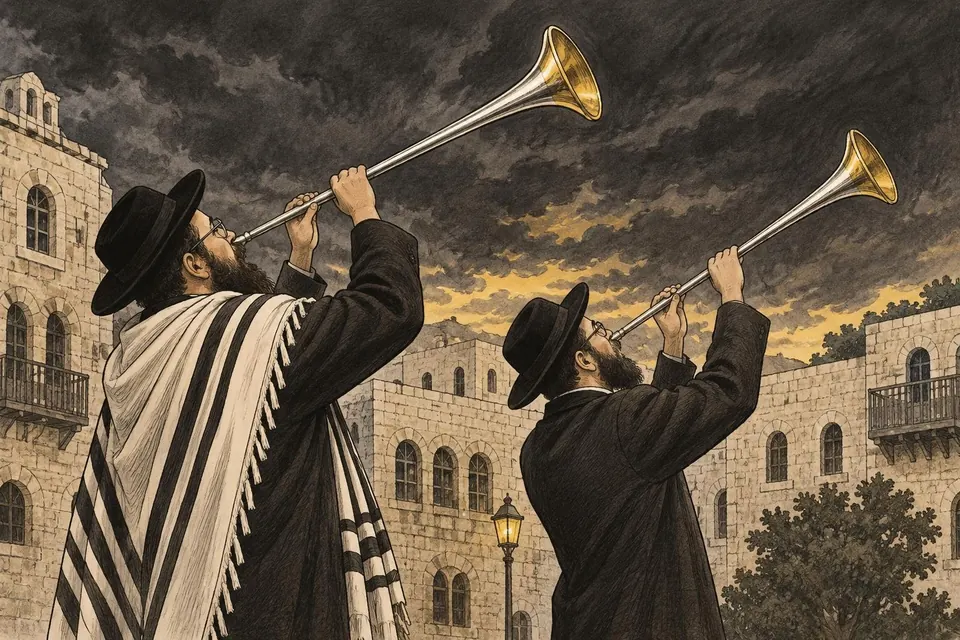
In brief
- The Torah commands the community to cry out to the Creator and sound trumpets in times of trouble.
- Maimonides describes this response as part of repentance.
- He calls dismissing tragedy as chance a way of cruelty.
- Rabbi Nosson Scherman explains that failing to act when one can stop suffering is cruel.
Parashat Behaalotecha#
Our weekly portion contains a positive mitzvah (Maimonides, Laws of Fasts 1): to cry out to the Creator and sound trumpets over any trouble that strikes the community. According to some opinions, this law applies today in the Land of Israel. According to others, it applies only when the Temple is rebuilt.
Maimonides cites the passage containing this mitzvah (Numbers 10:9) and explains that any community-wide calamity, such as an epidemic or a plague of locusts, calls for crying out to the Creator and sounding trumpets.
Maimonides explains that this is part of teshuvah. The sound of the trumpets prompts us to recognize that these troubles have come upon us because of our sins. This recognition, together with the intention to repent and improve ourselves and the community as a whole, is what brings the troubles to an end.
But Maimonides notes that a community may respond in the opposite way. Instead of crying out and sounding trumpets, repenting and praying, people may attribute what is happening to chance, “nature,” or statistics, saying, “That’s life.” Maimonides calls such behavior derech achzariyut (a way of cruelty). It leads people to continue on their evil paths, and God increases the punishment.
Maimonides’ description, derech achzariyut, always raises a question. He could have called it “the way of those who abandon their faith” or “the way of fools.” But “the way of cruelty” seems strange. What does this behavior have to do with cruelty?
Rabbi Nosson Scherman offers an explanation. He compares the situation to an “unlucky” intersection in a neighborhood where traffic accidents happen constantly. Again and again, there is another accident and more victims.
Someone approaches a government official and asks, “Please, do something to improve the situation. Put up a stop sign, or install a traffic light. Do something to prevent more accidents.”
But the bureaucrat replies, “No, our department has decided there’s no need for any new signs at this intersection.” He is truly cruel because he had the power to stop the traffic disasters but chose to do nothing. True cruelty is having the ability to stop suffering and failing to do so, even though it is entirely possible.
This is what Maimonides is telling us. Calamities strike a community, and the community can set things right. Sounding the trumpets and repenting can bring the troubles to an end, yet the community does nothing to change. All its problems are dismissed as “the realities of life,” and such a community is truly cruel to its people.
How often do we see that something is wrong in the community, yet give in to the urge to say, “Well, that’s life”? That is cruel. It is not at all what the Torah expects of us. God wants us to put up a stop sign. We must stop, think, respond, and try to set things right. A community that responds to calamities differently is no better than the bureaucrat who refused to put up a sign at a deadly intersection.
By Rabbi Yissocher Frand
Keep reading
More →Vaera: The Soccer Player and the Magician
A story about a soccer player helps explain why seeing something can affect us more deeply than knowing it.
CharacterLashon Hara and Free Speech: Life and Death in the Tongue
Jewish teachings on the power of speech challenge us to consider how we use our words.
ParashaKorach: Who Wins an Argument?
Moses’ response to a painful accusation offers a lesson in walking away from conflict.
ParashaKorach: How to Avoid Arguments
Two stories show how choosing not to argue can keep a dispute from growing.







