Is It Forbidden to Listen to Lashon Hara?
The laws of listening to, believing, and responding to harmful speech.
In brief
- It is generally forbidden to listen to or believe lashon hara.
- Listening is permitted in certain situations to prevent harm, but the information must not be accepted as true without thorough verification.
- Sometimes listening is required to refute a falsehood or reconcile disputing parties.
- Someone who believes lashon hara must repent and take steps to address the harm.
Chapter 6#
The prohibition against listening to and believing lashon hara (harmful speech), and how to act when others are speaking it.
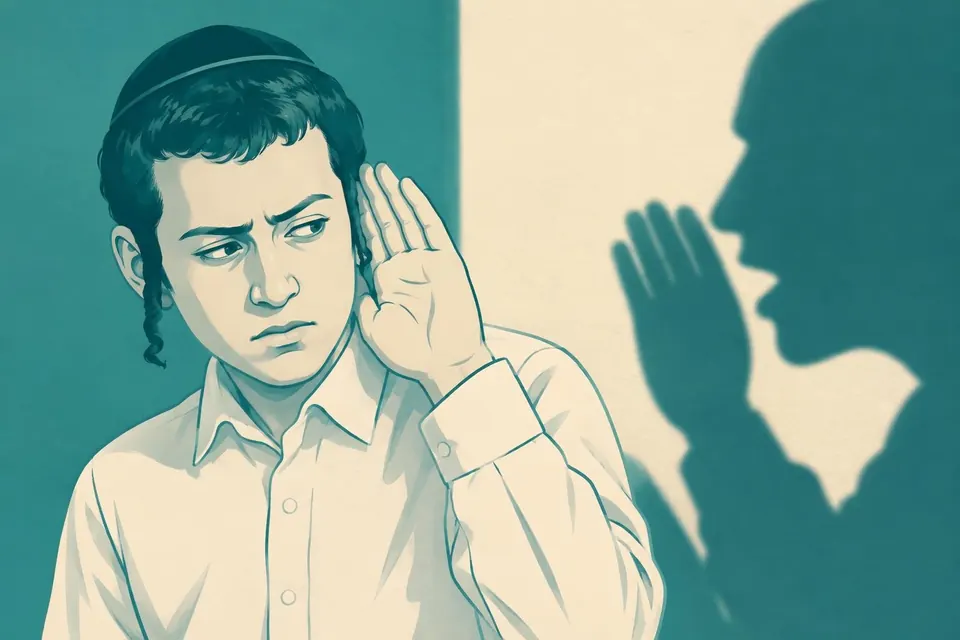
- It is forbidden both to speak negatively about others and to listen to such speech. Someone who hears lashon hara and expresses agreement aloud violates both prohibitions at once: listening and speaking.
- It is forbidden to listen to lashon hara even if the listener does not believe a single word. When someone needs information about a potential business partner or a shidduch (a prospective marriage match), or when a theft has occurred and someone needs to find the thief and return the stolen property to its owners, they may ask questions and listen to negative information to protect themselves or others from danger. But they may not believe what they hear without thoroughly verifying it.
- Before listening to negative information about someone, one should ask the speaker whether the information is necessary to protect oneself and help others. If the answer is yes, one may listen and take it into account, but may not believe what is said.
- Sometimes listening to lashon hara is not only permitted but required. If listening will enable someone to prove to the speaker and the listeners that the statement is false, or to reconcile disputing parties and end hostility and conflict, they are obligated to listen. They must not, however, believe what they hear or pass it on to others.
- Someone who happens to be present where lashon hara is being spoken must tell those present that they are violating a prohibition, in order to prevent them from doing so.
If it is clear that intervening will lead to even worse violations, one must leave as quickly as possible. Someone who can leave but does not do so violates Torah law.
If leaving is impossible, one must plug one's ears and not listen. If circumstances make even that impossible, one must at least make every effort not to believe what is said, reflect on how repugnant speaking negatively about others is, and refrain from joining the conversation or, all the more so, expressing agreement. On the contrary, one should, as far as possible, show disagreement and displeasure through one's demeanor.
- Someone who hears negative information about another person and believes it violates the prohibition against believing lashon hara. If the actions they heard about could have been judged favorably, but the listener did not do so, they also violate the commandment: “Judge your fellow fairly” [Leviticus 19:15].
- Whenever a speaker violates the prohibition against speaking negatively about another person, a listener who believes what is said violates the prohibition against believing lashon hara.
- In cases where listening to lashon hara is permitted, such as when asking about a prospective business partner or bride or groom, one may act on the negative information to protect oneself or others from possible harm, inconvenience, or the like, but may not believe it.
One must continue to treat the person discussed as before and help them as the Torah requires us to help any fellow person. It is forbidden to despise them, harm them, or undermine their standing in any way.
- Someone who has believed lashon hara must do teshuvah—that is, repent and return to the right path. They must try to erase from memory everything they were forbidden to believe, regret the violation, confess it aloud before God in a whisper and without witnesses, and resolve never to commit this sin again.
If they have already repeated what they heard to others, they must try to convince them that it is untrue. If that is impossible, they must obtain the forgiveness of the person who was discussed.
Practical law. This page reports a ruling given for a specific question. For your own situation, ask a rabbi who knows you.
Keep reading
More →Vaera: The Soccer Player and the Magician
A story about a soccer player helps explain why seeing something can affect us more deeply than knowing it.
CharacterLashon Hara and Free Speech: Life and Death in the Tongue
Jewish teachings on the power of speech challenge us to consider how we use our words.
ParashaBehaalotecha: What Makes a Response to Tragedy Cruel?
Maimonides calls it cruel to dismiss communal tragedy as simply part of life.
ParashaKorach: Who Wins an Argument?
Moses’ response to a painful accusation offers a lesson in walking away from conflict.







