What Is True Humility in Judaism?
The cedar and hyssop in the purification of a metzora offer a lesson in true humility.
In brief
- The cedar, hyssop, and scarlet thread used to purify a metzora point to different aspects of humility.
- A person should recognize their smallness before God without dismissing the importance of their actions.
- True humility means recognizing that our greatness and abilities come from the Creator.
- The righteous see greatness as a gift from God, while the wicked regard it as their due.
Parashat Metzora#
“This shall be the law of the metzora (one afflicted with tzaraat) on the day of his purification ... The priest shall command that two live, pure birds, cedar wood, scarlet thread, and hyssop be taken for the person being purified” (Leviticus 14:2–4).
Rashi explains that the scarlet thread and hyssop—a plant that usually lies close to the ground—were brought to teach the metzora what he must do to be healed. He must recognize that he is small and insignificant, like a worm and like the hyssop. In this way, he will rid himself of his arrogance and be healed, for tzaraat is a punishment for pride [Rashi on Leviticus 14:4].
Cedar, Hyssop, and Scarlet Thread#
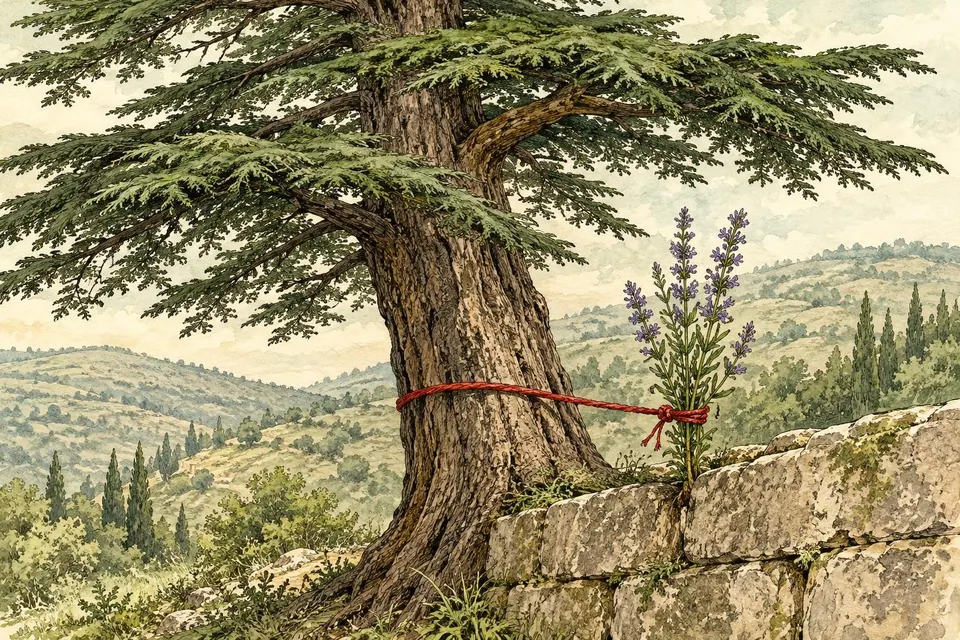
If so, why was cedar wood also needed for the purification? The cedar is one of the tallest and most majestic trees. It does not bring to mind the lowliness and submissiveness of a humble person.
The straightforward answer is that it was brought to show what the metzora needed to cast off and be healed of. Rashi’s commentary thus shows us that the cedar alludes to the pride a person must shed.
But we can add another explanation: The Torah commanded that cedar wood be brought together with the hyssop and scarlet thread to teach us the nature of true humility.
What True Humility Means#
Many people think that a humble person is someone who considers themselves utterly worthless and insignificant. But this is a mistake. Of course, a person must understand their insignificance before the Creator. As King David said of himself, “I was foolish and without understanding; I was like a beast before You” (Psalms 73:22). But this awareness must not lead a person to think that their actions are insignificant. It is important to recognize the great worth and importance of every action.
Rabbi Chaim of Volozhin writes in his famous book Nefesh HaChaim (1:4):
“Let no person of Israel say in their heart, God forbid: ‘Who am I, and what power do I have to affect the spiritual worlds through my lowly, material actions?’ Rather, they must understand, know, and fix in their heart that not a single detail of their actions, words, or thoughts at any moment or second is wasted, and how numerous are their deeds, and how great and exalted.”
True humility means recognizing that all our greatness and importance come from the Creator. In Psalms, King David describes the righteous person this way: “The righteous will flourish like a palm tree; they will grow tall like a cedar in Lebanon. Planted in the house of the Lord, they will flourish in the courtyards of our God” (Psalms 92:12–13).
Here the righteous person is compared to the cedar of Lebanon, known for its height and strength. But what distinguishes this person from the arrogant person, who, as we have seen, is also compared to a cedar? The righteous person is “planted in the house of the Lord”: They recognize that all their strength was given to them, and continues to be given to them, by the Creator.
As we have seen, when people consider themselves in relation to God, they should feel their insignificance before Him. The scarlet thread and hyssop allude to this. At the same time, they must not forget the importance of their actions, which is suggested by the cedar wood.
When the cedar, which alludes to an awareness of one’s own greatness, stands alone, it must be cast aside. But together with the hyssop and scarlet thread, which allude to one’s insignificance before the Creator, it has an important place in a person’s spiritual growth.
What is more, the more people recognize the importance and greatness the Creator has given them, the more they will humble themselves before Him, and the more humble they will be. They will understand what great kindness the Creator has shown them despite their insignificance. As King David said: “What is a human being that You remember him, and a son of man that You take notice of him? You made him only a little lower than the angels and crowned him with glory and splendor. You made him ruler over the works of Your hands; You placed everything beneath his feet” [Psalms 8:4–6].
Greatness Given by God#
The Talmud (Chullin 89a) says that the difference between the righteous and the wicked is especially apparent when God grants them greatness. The righteous “diminish” themselves at such a time. When God granted greatness to Abraham, Abraham said, “I am dust and ashes” (Genesis 18:27). When God granted greatness to Moses and Aaron, they said, “What are we?” (Exodus 16:7). And when He granted greatness to David, David said, “But I am a worm, not a man” (Psalms 22:6).
The wicked, the Talmud says, become proud when God elevates them. Pharaoh said, “Who is the Lord, that I should listen to His voice?” (Exodus 5:2). Sennacherib said, “Which of the gods of all these lands has saved its land from my hand, that the Lord should save Jerusalem from my hand?” (2 Kings 18:35). And Nebuchadnezzar said, “I will ascend above the heights of the clouds; I will make myself like the Most High” (Isaiah 14:14).
This difference comes from the way the righteous view everything that happens to them as a kindness from God. The greater the kindness, the “smaller” and less deserving of it they feel. That is why they “diminish” themselves. This is also the wording of the blessing recited by someone who has experienced a miracle: “Blessed are You, the Almighty, King of the universe, who bestows goodness upon the undeserving and who has bestowed goodness upon me.” The wicked, by contrast, view every good thing God sends them as something they deserve by right, and so they exalt themselves.
By Rabbi Reuven Kuklin
Keep reading
More →Vaera: The Soccer Player and the Magician
A story about a soccer player helps explain why seeing something can affect us more deeply than knowing it.
CharacterLashon Hara and Free Speech: Life and Death in the Tongue
Jewish teachings on the power of speech challenge us to consider how we use our words.
ParashaBehaalotecha: What Makes a Response to Tragedy Cruel?
Maimonides calls it cruel to dismiss communal tragedy as simply part of life.
ParashaKorach: Who Wins an Argument?
Moses’ response to a painful accusation offers a lesson in walking away from conflict.







