The Chafetz Chaim and the Pinch of Snuff
Rabbi Yaakov Galinsky recalls the Chafetz Chaim’s moving appeal to support Torah study.
In brief
- The Chafetz Chaim traveled to raise support for struggling yeshivas.
- He warned that those who can support Torah study but do not do so will have to answer for it.
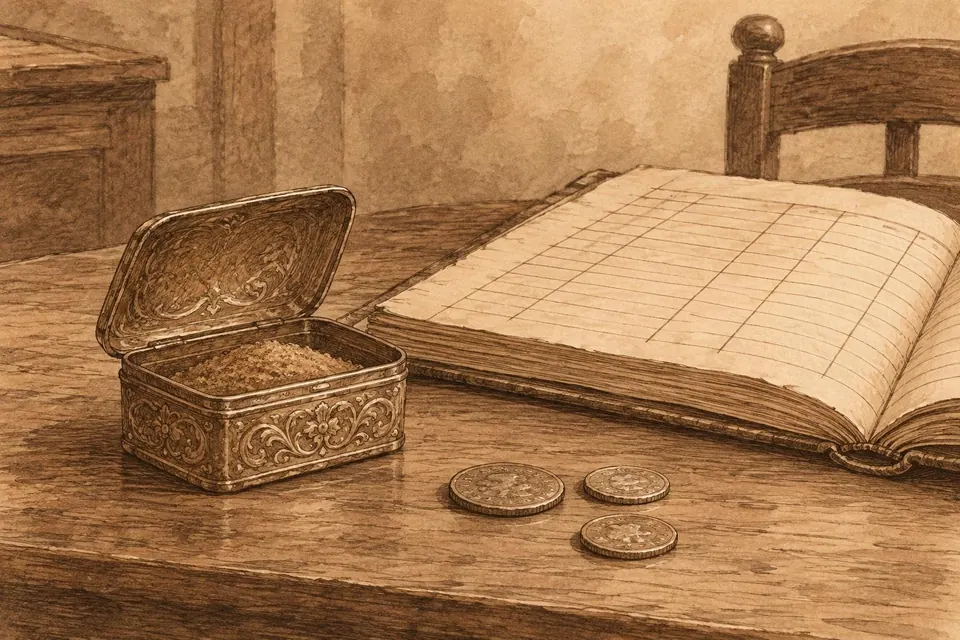
- His story of a man who brought home only a pinch of snuff from a fair asks what a soul will bring back from this world.
- Even great acts of generosity can fall short of what a person is capable of giving.
Parashat Ki Tavo#
I was a teenager when the great Chafetz Chaim came to our town of Krynki, Poland. Though already an old man, he made a long journey through cities and towns to encourage people to support the organization he had founded, the Council of Yeshivas. At the time, the yeshivas were in desperate straits, and their students were literally starving. The Chafetz Chaim had established the organization to help each yeshiva according to its needs.
For his visit, the largest hall in town was rented, and a huge crowd of Jews filled it to see the great righteous man. It was so crowded that when the Chafetz Chaim arrived, he could not make his way through the audience. They seated him on a chair and passed him from hand to hand over the crowd until he reached the platform.
By then, the leader of the generation was very old and weak. Making the journey was an act of self-sacrifice for the sake of Torah. He was too weak to speak for long, but everyone listened in awe of the holy man. I remember every word the Chafetz Chaim said that day.
“Dear friends!
“The Talmud says that after a person dies, the first thing they are judged for is their relationship to Torah (Sanhedrin 7a; Kiddushin 40b). After 120 years, the first question they must answer is how much Torah they studied and how they supported those who studied it.
“The portion of Ki Tavo says: ‘Cursed is the one who does not uphold the words of this Torah to carry them out. And all the people shall say: Amen!’ [Deuteronomy 27:26]
“Commenting on this verse, Nachmanides (the Ramban) cites the Jerusalem Talmud: If a person studied and taught Torah and observed and fulfilled its laws, but was able to support those who study Torah and did not, that person is also among the cursed [because they could have upheld Torah for others and did not] [Nachmanides on Deuteronomy 27:26].
“So what will we answer on the day of judgment? What will we bring with us—a pinch of snuff?”
He burst into tears, and everyone present wept with him.
I was a little puzzled. I did not understand what he meant by “a pinch of snuff.” Perhaps it was simply an example of a tiny amount: How much can you pick up between your thumb and forefinger?
Much later, though, I heard a story, and then I understood.
Once, the Chafetz Chaim came into the synagogue and saw people laughing among themselves. “What happened?” he asked.
They told him there was a fair in Eishishkes, a town in Lithuania on the border with Belarus, several dozen kilometers from Radin, in the Grodno region of Belarus, near the Lithuanian border. Merchants from Radin traveled there to sell their wares and buy other goods. Now the town fool had just returned, tired and disheveled, announcing, “I’m back from the fair!”
He had walked there and back.
“What did you have to do at the fair?” they asked him. In response, he held up his hand with a pinch of tobacco between his fingers. He had asked a merchant for a pinch of snuff—and had been given one.
“I made the best deal!” he announced happily. “Everyone else pays money for goods, but I got mine for free!”
He had lived up to his reputation as a madman: trudging all the way to Eishishkes for a pinch of tobacco?
The Chafetz Chaim shook his head. “Instead of laughing at him, we should take pity on ourselves!”
The people did not understand, so he explained. “A holy soul, whose roots are in the greatest heavenly heights, descended through all the worlds and found itself in our world. Why? What does it need here? Because there is a fair here: Here one can study Torah, perform mitzvot, and withstand trials. Here one can acquire precious, priceless goods, for which an immense, eternal, and radiant reward is paid in the World Above.
“The day will come when the soul returns to its source. And it will be asked, ‘Well, what did you bring back from the fair?’ What will it show—a pinch of snuff?”
It is a frightening thought. Nakdimon ben Gurion saw to it that all the pilgrims traveling to the Temple had water. God even stopped the sun for him, so pure were his intentions (Taanit 20a). He donated an enormous fortune so that Jerusalem could withstand a siege. When he left his house, carpets were spread before him, and poor people followed, rolling them up and taking them for themselves. Yet the Talmud says that he did not do enough: He could have given more.
The great sage of the Mishnah, Rabbi Chanina ben Teradion, not only studied Torah at the highest level but was also a trustworthy collector of donations. He gave from his own funds and not only distributed tzedakah but helped people through his actions. Yet even he did not escape a terrible sentence [he was one of the ten Sages brutally murdered by the Romans—translator’s note], because he had not done enough; he could have done more. As the saying goes, “A camel is loaded according to its strength.”
We cannot laugh at the fool of Radin: A pinch of snuff was all he was capable of bringing back. But what about us? How can we come back with a pinch of snuff?
By Rabbi Yaakov Galinsky
Keep reading
More →Hanukkah: The Torah Will Not Be Forgotten
Hanukkah reveals why every Jew has a share in preserving the Torah for future generations.
Torah StudyWhy Must Everyone Study Torah?
The Talmud’s examples of Hillel, Rabbi Elazar, and Joseph show why circumstances do not excuse neglecting Torah study.

Lech Lecha: Where Are You Going?