Will Pigs Become Kosher in the Messianic Era?
Jewish commentators offer different readings of a Midrash about pigs and the future of evil.
In brief
- A Midrash says that pigs will become kosher in the future.
- Or HaChaim understands this literally, while Rabbeinu Bachya reads it as an allusion to the kingdom of Edom.
- Other commentators explain the teaching through Kabbalah.
- The Midrash teaches that evil is not absolute and will ultimately become good.
“And the pig, for it has a split hoof that is completely divided, but it does not chew its cud: it is impure for you. You shall not eat their flesh or touch their carcasses; they are impure for you” (Leviticus 11:7–8).
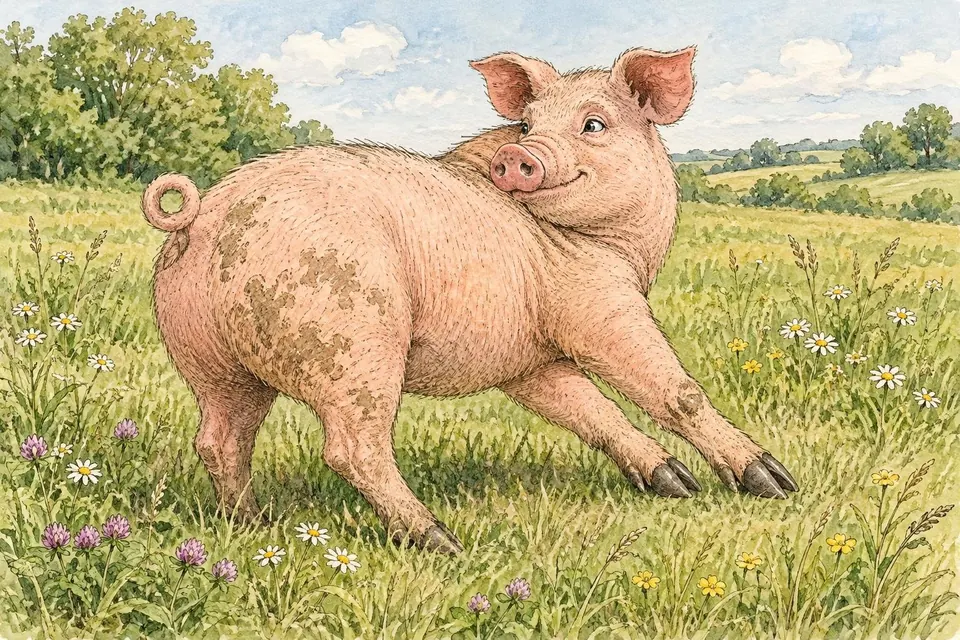
A Midrash says that in the future, the pig will become a kosher animal (Vayikra Rabbah 13). Another Midrash, Shocher Tov, goes further: it records the view that all non-kosher animals will become kosher (Shocher Tov 146). Torah scholars disagree about whether to understand this teaching literally.
Or HaChaim on Leviticus 11:3 appears to understand it literally. According to this reading, the pig will begin to chew its cud, acquiring both signs of a kosher animal: chewing its cud and having split hooves. The Torah itself, after all, will never be changed.
Rabbeinu Bachya on Leviticus 11:4–7, however, understands the Midrash figuratively. He explains that the Sages are alluding to the kingdom of Edom, which is spiritually connected to this animal. Eventually, it will stop harming and obstructing the Jewish people and will instead help build the Third Temple. Recanati, in his commentary on Parashat Tetzaveh, and Shelah HaKadosh, in Toldot Adam, Beit David, explain the Sages’ words through Kabbalah.
Either way, the Midrash is surely telling us that there is no absolute evil in the world. Evil is necessary only to give a person the ability to choose in this world, making a reward for the right choice possible. In the future, when evil is no longer needed, it will turn into good.
We hate evil because it is evil, because it keeps us from drawing close to the Creator. But if evil ceases to be evil and no longer stands in the way of our drawing close to the Creator, we will have no reason to hate it—even after so many centuries of treating it as “special.”
By Rabbi Reuven Kuklin
Keep reading
More →What Blessing Do You Say on Crackers, Croutons, and Matzah?
The blessing depends on how the food is made, how it is eaten, and, in the case of matzah, family tradition.
Guide · KosherWhat Blessing Do You Say on an Ice Cream Cone?
The blessing depends on how the cone is treated in relation to the ice cream.
KosherCan You Eat Meat and Milk Outside Israel?
A teaching on Parashat Mishpatim explains why the prohibition applies both in Israel and beyond.
ParashaToldot: Finding Holiness in Eating
A meal can be a moment of closeness to God when we recognize the life and pleasure He gives us through food.







