Rabbi Aharon Leib Shteinman: A Biography
The early life of Rabbi Aharon Leib Shteinman, from his childhood in Brisk to his years as a refugee in Switzerland.
In brief
- Rabbi Aharon Leib Shteinman grew up in poverty in Brisk and showed exceptional dedication to Torah study.
- He studied with leading Torah scholars, including Rabbi Simcha Zelig Riger.
- He went to Switzerland before World War II and lost almost his entire immediate family in the Holocaust.
- In Switzerland, he studied and taught Torah, including during his imprisonment in a labor camp.
From the author: In his will, our teacher Rabbi Aharon Leib asked that no hespedim (eulogies) be delivered for him and that no articles about his life be published. However, the leader of our generation, Rabbi Chaim Kanievsky, known as the Sar HaTorah (Prince of Torah), ruled that this was permitted and was a mitzvah out of respect for the Torah. He also said that an account of our great teacher's life and deeds could have a positive influence on many people.
Biographies of great people often seem familiar down to the smallest detail. That impression is frequently misleading, even in our own generation, when a prominent person can hardly escape public attention. In the final years of his extraordinary life, Rabbi Aharon Yehudah Leib Shteinman was widely recognized in Israel and far beyond it. Yet much of his life and many of his deeds remained unknown to the public, thanks in no small part to his remarkable humility and his ability to avoid honor—qualities of a truly great Torah scholar.
It is important for us to learn as much as we can about the lives of our great Sages, particularly those who connected the pre-Holocaust Torah world with our generation. They transmitted to us the Torah of the generation murdered by the Nazis—may their name be erased. Through them, God's promise that the Torah would not be forgotten among the Jewish people was fulfilled. Their Torah and their deeds offer us an especially relevant example in studying and observing God's will, in education, and in spiritual growth—both for ourselves and for our children.
Brisk#
Rabbi Aharon Yehudah Leib Shteiman—that was the original form of his surname, without the second “n”—was born on 15 Cheshvan 5675 (November 4, 1914) in Kamenets, then part of Poland and now in Belarus. His parents, Rabbi Tzvi Noach and Rebbetzin Gitel Feiga, were staying with relatives in Kamenets when he was born. Their home in Brisk, where Rabbi Aharon spent his youth, was too close to the front line of the recently begun World War I.
Rabbi Noach Tzvi Shteiman was a man wholly immersed in Torah and mitzvot. He was the shamash (caretaker) of a beit midrash (study hall), a leader of the local chevra kadisha (burial society), and a teacher in a cheder (Jewish elementary school).
Rabbi Meshulam David Soloveitchik, head of the Brisk yeshiva in Jerusalem and son of Rabbi Yitzchak Zev Soloveitchik, recalled that Rabbi Noach Shteiman did many acts of kindness for the Jews of Brisk without asking for payment. Twice a year, before Passover and Sukkot, the Brisker Rav distributed funds to Jews in need. Before Passover, matzah was distributed along with the money. The Brisker Rav entrusted this work to none other than Rabbi Noach Shteiman. Before winter, Rabbi Noach also delivered firewood around the city to poor families, using wood purchased by Rabbi Soloveitchik.
Rabbi Noach Shteiman was also responsible for inspecting the city's eruv (a boundary that permits carrying in an area on Shabbat). Each week he had to examine the entire eruv and repair it if necessary. Today it is hard to appreciate how important this work was, but in those days the whole community's observance of Shabbat literally depended on it.
The Shulchan Aruch, Orach Chaim 276:2, and Mishnah Berurah 276:25 say that Jews should eat hot food on Shabbat. In those days, people fulfilled this teaching of the Sages by placing their pots of cholent (a slow-cooked Shabbat stew) in the bakery oven every Friday while it was still warm. The huge oven kept the food hot until Shabbat morning, when people collected their pots before the meal and carried them home. The whole operation was possible only if the city's eruv was intact and valid.
Rabbi Meshulam David Soloveitchik also recalled that Rabbi Noach Shteiman was an ish shalom vechacham—a man of peace and wisdom. When disputes and conflicts arose among the Jews of Brisk, Rabbi Noach often helped the parties make peace.
Rabbi Noach and Rebbetzin Gitel had four children: Moshe Eliyahu, Aharon, the second oldest, Eliezer Zev, and a daughter, Golda. Rabbi Aharon's younger brother Eliezer Zev died in infancy from malnutrition and infections.
Rabbi Shteinman grew up in difficult conditions. Poverty was widespread and devastating. Things were so hard that Rabbi Aharon clearly remembered the day he first saw milk. Not knowing what the liquid was, he asked his mother, “What's that white stuff?”
Early Studies#
Immersed in Torah study and communal affairs, Rabbi Noach Tzvi was often away from home for long periods. Rebbetzin Gitel did not want her sons exposed to life on the streets, so she took them to cheder herself every day. Despite their poverty, the Shteimans also hired an additional teacher for young Aharon to study the books of the Prophets with him.
Aharon Shteiman's first teacher was Rabbi Yaakov Weinstock, an elderly and experienced melamed (teacher). By the time they began studying together, Rabbi Weinstock was almost completely blind. But his memory was extraordinary: even in old age, he remembered the entire Talmud with the commentaries of Rashi and Tosafot.
There was one cheder in Brisk. As Rabbi Aharon himself said, “Everyone studied there, from the Brisker Rav's sons to the children of communists.” Under pressure from part of the community, however, a group was formed to study secular subjects, as well as Russian and Polish. Rabbi Aharon's parents clearly had no desire to give their children a non-Jewish education, and his knowledge of Polish and Russian was minimal. Torah study was another matter: he excelled at it even at a very young age.
Torat Chesed Yeshiva#
Aharon Shteiman was only 11 when Rabbi Moshe Sokolovsky came to the cheder to test the boys. Rabbi Sokolovsky was a great Torah scholar, the author of Imrei Moshe, a book that remains important and popular in the Torah world today, and the head of the Torat Chesed yeshiva. Aharon's answers amazed him. His grasp of the material surpassed not only that of boys his own age but also that of older students.
Aharon entered Torat Chesed at 12 without an entrance examination. Rabbi Sokolovsky remembered very well how much the boy had known when he tested him at the cheder. Aharon was the youngest student in the yeshiva. Admitting a 12-year-old was highly unusual—students were generally admitted from age 15—but an exception was made because of his unusually deep knowledge.
Torat Chesed accepted students from beyond Brisk, and many gifted young men from other towns studied there. The Brisker Rav's older sons were also Rabbi Sokolovsky's students.
Young Aharon found himself among students older than he was. Some saw the newcomer as a show-off and doubted that a boy who had not even reached bar mitzvah age could study with such persistence.
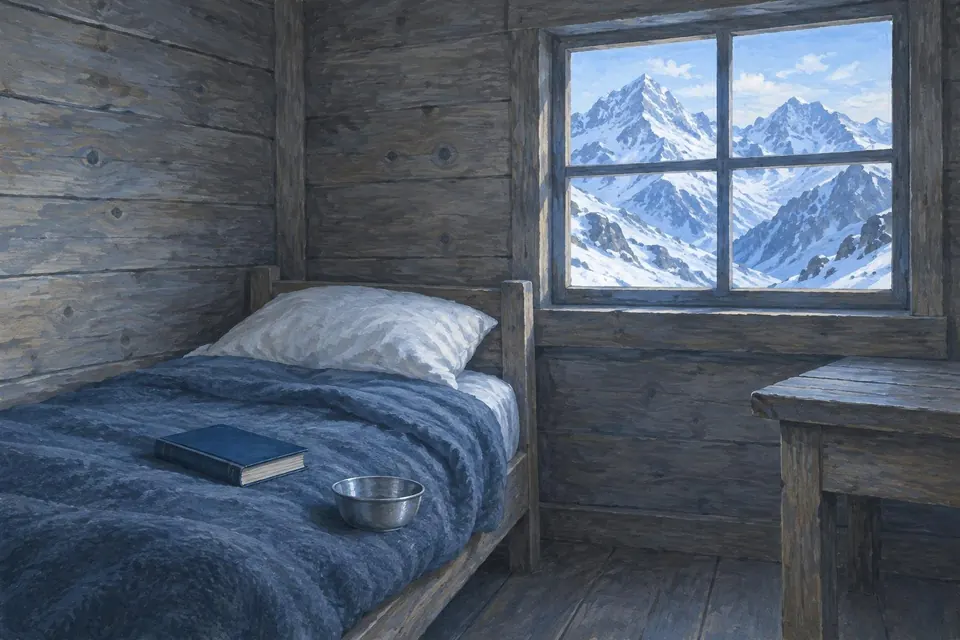
They decided to play a prank on him. They placed a small bowl of water in his yeshiva bed—or, according to another version, a homemade “doll.” The “conspirators” waited to see how the newcomer would react.
The scheduled study sessions ended and night fell, but Aharon did not come near his room or his bed. The boys waited all night and then went looking for him. They found him in the beit midrash. He had been so absorbed in his studies that he had not thought of leaving. He studied all night, and when exhaustion overcame him, he fell asleep at his shtender (study lectern).
The pranksters did not give up. They repeated the trick the following night: sooner or later, he had to go to bed. But on the second night too, Aharon stayed in the beit midrash. Once the older students understood that the newcomer was not a show-off and truly possessed knowledge and persistence unusual for his age, they came to respect him deeply.
Years later, Rabbi Shteinman did not speak of “persecution” by the older students or of falling asleep at his shtender in the beit midrash. He spoke only of the great joy he had found in studying the Talmudic tractate Yevamot at Torat Chesed.
Rabbi Simcha Zelig Riger#
Alongside Rabbi Moshe Sokolovsky, Rabbi Simcha Zelig Riger had an enormous influence on Rabbi Aharon Leib's development as a great Torah scholar. He was a relative on Rabbi Aharon's mother's side.
A great Torah scholar and authority on Jewish law, Rabbi Simcha Zelig Riger was born on 20 Adar 5624 (1864) in Novardok, also known as Novogrudok. Soon afterward, his parents moved to Brisk. As a young man, Rabbi Riger studied with the great Rabbi Yehoshua Leib Diskin, known as the Maharil, and in the kollel (advanced Torah study program) of the Volozhin yeshiva.
When Rabbi Yosef Dov Soloveitchik, author of Beit HaLevi, head of the Volozhin yeshiva, and founder of a rabbinic dynasty, died, the position of rabbi of Brisk was offered to his son Rabbi Chaim, known as Rabbi Chaim Brisker. He accepted on the condition that Rabbi Simcha Zelig Riger serve as dayan (rabbinic judge) and answer the community's questions about halacha. When Rabbi Chaim Soloveitchik had headed the Volozhin yeshiva, Rabbi Simcha Zelig had answered the students' halachic questions and was considered an outstanding expert in Jewish law. Rabbi Riger compared his long friendship with Rabbi Chaim to the friendship of David and Jonathan.
After Rabbi Chaim Soloveitchik died, his son Rabbi Yitzchak Zev, known as the Griz or the Brisker Rav, became rabbi of Brisk. Rabbi Simcha Zelig continued as the community's dayan and authority on Jewish law.
The Shteiman family lived at 46 Listovska Street. The families of the Brisker Rav and Rabbi Riger lived at number 42 on the same street. Young Aharon Shteiman often visited that house. Because of his family connection, he could not only study Torah there but also observe two of the generation's greatest scholars, Rabbi Yitzchak Zev Soloveitchik and Rabbi Simcha Zelig Riger, in their daily lives.
Years later, Rabbi Aharon Leib recalled with warmth and great respect his studies with Rabbi Riger and what he had seen in his home and in the Brisker Rav's home. Rabbi Shteinman's sons, Rabbi Shraga and Rabbi Moshe, remembered that when they were young, hardly a Shabbat meal passed without their father sharing a Torah teaching in Rabbi Simcha Zelig's name.
Rabbi Aharon Leib told a story about his great teacher. Once, the Chafetz Chaim, Rabbi Chaim Brisker, and Rabbi Simcha Zelig Riger were to attend a meeting together. At the entrance to the synagogue, a question arose: which of the great scholars should enter first? The Chafetz Chaim and Rabbi Chaim Brisker decided to submit the question to a Jewish judge. Rabbi Simcha Zelig would rule on the order in which they should enter. Rabbi Riger decided that the kohen, or priest—the Chafetz Chaim—should go first, followed by the Levite, Rabbi Chaim Soloveitchik, and then the Yisrael (a Jew who is neither a kohen nor a Levite): Rabbi Riger himself.
The Path to Greatness#
After Rabbi Moshe Sokolovsky's death, a serious dispute arose at Torat Chesed over who would succeed him. The first candidate proposed was our teacher Rabbi Elazar Menachem Man Shach. He came to Brisk for a week and stayed at the Shteiman home. Rabbi Aharon Leib, who was home at the time, spent many hours discussing difficult Talmudic questions with him. Their meeting began a friendship between two future leaders of the Jewish people that lasted many years.
A condition of becoming head of Torat Chesed was taking responsibility for the institution's financial burden. Rabbi Shach would not agree to it, and the Brisker Rav later acknowledged that he had been right.
Another man was appointed head of the yeshiva, but the dispute did not subside. Rabbi Aharon's childhood friend Rabbi Moshe Soloveitchik, grandson of Rabbi Chaim Brisker and son of Rabbi Gershon Soloveitchik, left the yeshiva because he could no longer bear the growing discord. Many years later, he founded the Torat Chaim yeshiva in Moscow. Rabbi Aharon followed him out of the yeshiva.
Even then, Rabbi Aharon showed one of his greatest qualities: he avoided all disputes as he would fire. In every situation, peace among Jews must come first. He later observed more than once, “None of those who took an active part in that dispute at the yeshiva became great in Torah. The path to greatness in Torah cannot lead through machloket (discord).”
After leaving Brisk, Rabbi Aharon Leib went to the Kletsk yeshiva, where he studied briefly under another future leader of the Jewish people, Rabbi Aharon Kotler. He then moved to Kobrin and studied for about a year with the great Torah scholar Rabbi Pesach Pruskin. Rabbi Shteinman also spent some time with his uncle in Kamenets, attending the classes of the great Torah scholar Rabbi Baruch Ber Leibowitz, head of the Knesset Yitzchak yeshiva.
At the personal request of his teacher, Rabbi Simcha Zelig Riger, Rabbi Aharon returned to Torat Chesed in Brisk. He used his time near his great teacher to study Jewish law in depth. Although he was only 22, Rabbi Aharon Leib received semichah (rabbinic ordination) from both Rabbi Simcha Zelig Riger and the Brisker Rav.
Rabbi Simcha Zelig's wife, Rebbetzin Sarah, was paralyzed during the last years of her life. For more than a year, Rabbi Aharon and his teacher studied together at the sick woman's bedside while caring for her. Rabbi Aharon later recalled that Rabbi Simcha held a spoon in one hand to feed his wife and turned the pages of the book they were studying with the other.
Exile and Rescue#
No one can foresee Heaven's true intentions. Sometimes events seem like endless hardships. But sometimes God sends a person trials that are meant to save their life from a harsh decree against the entire Jewish people.
In 1937, Rabbi Aharon faced the threat of compulsory service in the Polish army. Many efforts were made to avoid it, but none succeeded. A very promising shidduch (match) was also proposed to him, but it came to nothing; being married would have allowed him to avoid army service. Rabbi Aharon found this disappointment especially painful, as any young man might. Only when the war began did it become clear that these trials were part of a path to safety that God was preparing for him.
To avoid the draft, Rabbi Aharon Leib and his friend Rabbi Moshe Soloveitchik were advised by Rabbi Simcha Zelig Riger to go to the Etz Chaim yeshiva in Switzerland, headed by Rabbi Eliyahu Botchko. In addition to Rabbi Simcha Zelig, letters of recommendation for the young Torah scholars were signed by Rabbi Chaim Ozer Grodzinski, a leader of the generation, and Rabbi Baruch Ber Leibowitz. Rabbi Baruch Ber wrote that he saw in Rabbi Aharon a future great scholar of the Jewish people. The letters from the generation's leading Torah scholars had their effect: Rabbi Shteinman was invited to teach at Etz Chaim in Montreux, which gave him the right to enter Switzerland.
For those of us who know what happened next to the Jews of Europe, the choice seems obvious. How could anyone turn down such a gift from Heaven? But for Rabbi Shteinman, the choice was not easy. He would have to leave everything dear to him—his beloved family and his great Torah teacher—and set out on a dangerous journey into the unknown.
Under Rabbi Riger's supervision, Rabbi Aharon Leib used the Goral HaGra (the Vilna Gaon's method of seeking guidance through a biblical verse), a special segulah (spiritual practice). The verse he saw said: “When morning came and it was light, the men were sent on their way, they and their donkeys” (Genesis 44:3). Only then did Rabbi Shteinman begin preparing for the journey.
On the way to Switzerland, a customs clerk thought the surname “Shteiman” did not sound good and added an “n.” That gave Rabbi Aharon Leib the familiar surname Shteinman. Although his surname later appeared in its original form on his entry documents for Israel, Rabbi Aharon used Shteinman for the rest of his life.
Rabbi Aharon Leib planned to stay in Switzerland until he turned 25, when he would automatically be exempt from Polish army service. But World War II began, and Rabbi Shteinman was never to return to Brisk or see any of his immediate family alive again.
The persecution and murder of Brisk's Jews began as soon as the German army entered the city on June 22, 1941. Just six days later, the Nazis took 5,000 Jews outside the city and killed them. A Jewish ghetto was established in December of that year.
The elderly Rabbi Simcha Zelig Riger bore the heavy burden of leading the community during its greatest suffering. Shortly before the war began, the Brisker Rav had left and was unable to return. The elderly scholar, now the community's de facto leader, was constantly abused and beaten, but he did not abandon his post until the very last day.
From Switzerland, Rabbi Aharon Leib tried to rescue his family and loved ones. With the help of the Sternbuch family, he managed to send his parents South American visas through diplomatic channels. Rabbi Yitzchak and Recha Sternbuch worked to rescue Jews throughout Europe, obtaining visas and helping them settle in Switzerland and other countries. They played a major role in the lives of Rabbi Shteinman and his family, as well as in the lives of thousands of people they saved. His parents, however, had no opportunity to use the visas and most likely never even saw them.
On 4 Cheshvan 5703 (October 15, 1942), most of the Jews still in the Brisk ghetto were deported to a place called Bronnaya Gora and shot. The few who survived the “action” in underground hiding places or in the homes of non-Jews who sheltered them were killed in the following days. The Nazis and their collaborators—may their name be erased—conducted numerous raids to find Jews.
Rabbi Noach Tzvi and Rebbetzin Gitel Shteiman, their son Rabbi Moshe Eliyahu with his wife and three children, and their daughter Golda with her fiancé, Rabbi Zalman Lushnitzer, a close student of Rabbi Baruch Ber Leibowitz, were murdered, sanctifying God's name. Rabbi Aharon Yehudah Leib was left almost the only survivor of his family; two of his female cousins also survived.
Thanks to the few survivors, we know that even in the face of certain death, Rabbi Simcha Zelig Riger did not abandon his post or his community. When word spread that the Jews of the Brisk ghetto faced an “action,” many began putting on tallitot (prayer shawls) and kittels (white ceremonial robes) to meet death in Jewish garments. But Rabbi Riger ruled that they should not do so, basing his decision on the law that those who sanctify the Creator's name are “buried in their ordinary clothes, to increase God's anger over the murder of Jews” (Shulchan Aruch, Yoreh Deah 364:4).
Etz Chaim in Switzerland#
Some time after arriving in Switzerland, Rabbi Aharon Leib was reunited with his friend and study partner Rabbi Moshe Soloveitchik. Over the following years, they studied and taught together at Etz Chaim in Montreux.
In Switzerland, Rabbi Shteinman remained true to himself. Other students recalled that they never saw him in his room. He was almost always in the beit midrash, either studying with Rabbi Moshe Soloveitchik or answering other students' questions; he had been invited to the yeshiva as a teacher. He also slept in the study hall when he finally ran out of strength. Rabbi Aharon's sons recalled that their father slept there only until his wedding. After he married, he slept only at home, although still for no more than two hours at a time.
A well-known book published during Rabbi Aharon Leib's lifetime included photographs of him from his Swiss years, in which he had no beard. Some people regarded publishing the photographs as disrespectful to a leader of the generation and a great head of a yeshiva. The author went to Rabbi Aharon Leib to apologize.
Rabbi Aharon smiled and said there was no need to apologize or remove the photographs; they did not bother him at all. “For some people, like me, a beard takes longer than usual to grow. And in Switzerland it was impractical and unsafe, so most Jewish refugees didn't have beards.”
In fact, Rabbi Aharon had had a beard in Brisk, although this was not common among students at Lithuanian yeshivas at the time. Before leaving for Switzerland, he consulted Rabbi Simcha Zelig and removed it with a special cream. The reason was simple: for a religious Jew with a beard, travel through prewar Europe held danger even with the most reliable documents. Rabbi Aharon's route to Switzerland took him through Berlin. He spent only 10 hours there, waiting for his train, but that was enough to make him fully aware of the danger. It was a few days before the notorious Kristallnacht pogrom, and the station was packed with German soldiers. Rabbi Shteinman told his grandchildren that throughout his wait in Berlin, he used a segulah taught by Rabbi Chaim of Volozhin, concentrating completely on the thought that the world has no ruler other than God.
After his wedding and before leaving for Israel at the end of the war, Rabbi Aharon Leib began growing his beard again.
The Jewish community in Montreux was small. When someone died, it was often necessary to call members of a chevra kadisha from other Swiss cities. The arrival of Rabbi Aharon Leib Shteinman and Rabbi Moshe Soloveitchik at the yeshiva solved the “problem.” Rabbi Aharon's father, Rabbi Noach Tzvi, had been a leader of the chevra kadisha in Brisk, and Rabbi Moshe's mother, Rebbetzin Miriam, had headed its women's section. The two men volunteered to perform the important and difficult mitzvah of preparing the dead for burial and burying them. They also helped the local chevra kadisha by giving a monthly class on the relevant laws from Chochmat Adam.
The Camp#
At the end of 1940, Rabbi Aharon Leib, along with other yeshiva students and Jewish refugees, was confined in the Schonburg labor camp. The Swiss government absurdly suspected the Jewish refugees of espionage! The camp was near Basel, and its prisoners were assigned to build roads. Rabbi Aharon's physical condition did not allow him to do heavy labor, which the camp authorities understood. They found him lighter work, although it too was on road construction.
Some of the 300 Jewish prisoners were religious. Kosher food was hard to obtain, and rations were meager. Thanks to the yeshiva students, however, arrangements were made to obtain milk by milking cows, and the authorities were persuaded to remove non-kosher meat from the diet.
Rabbi Aharon and Rabbi Moshe managed to bring one book into the camp: a work by Maimonides (the Rambam). Despite the hard labor, they studied it with almost the same persistence they had shown at the yeshiva. Rabbi Aharon later remembered the camp guards with gratitude: they did not interfere with the men's studies, and prisoners who agreed to work on Sunday could observe Shabbat.
Despite the forced labor, prisoners at Schonburg received a small payment in Swiss francs, which they mostly spent on cigarettes. The money was handed out on Friday afternoon. The first time the camp commandant distributed the “pay,” all the prisoners were lined up and called forward one by one. At the end, two envelopes remained. They bore the names Aharon Shteinman and Moshe Soloveitchik. For the two young Torah scholars, preparing to welcome the Shabbat Queen was far more important than the camp's “pay.” Their devotion impressed the commandant, and from then on the prisoners were paid on Friday morning.
A man named Baruch Egozi lived in Bnei Brak and worked at the post office. One day, Rabbi Aharon Leib's son Rabbi Shraga Shteinman came into his branch. Seeing the familiar surname, Baruch Egozi asked, “Do you know Aharon Shteinman?” Rabbi Shraga replied that of course he did: he was his father. Baruch Egozi was overjoyed. “When your father and I were in Schonburg, they fed us very poorly,” he said. “But for months, your father gave me half his portion!”
When Rabbi Shraga returned home, he asked his father about it. Rabbi Aharon replied calmly, “You know I've never had much of an appetite. If I had extra food, why wouldn't I share it with another unfortunate Jew?”
Release#
The hard outdoor work—the road was built in winter too—took its toll. Rabbi Aharon Leib became seriously ill and was placed in the camp infirmary. Suspected of having tuberculosis, he was transferred from the camp to a regular hospital. Thank God, the doctors' suspicions were not confirmed, but Rabbi Aharon was released for health reasons.
Before returning to the yeshiva, Rabbi Shteinman spent several months in other cities, recovering from the camp and his illness. Even so, he immediately reestablished contact with his students at the yeshiva. Although Rabbi Aharon was only 26 at the time, he took his duty as a Torah teacher very seriously. This is clear from the letters he sent his students in Montreux:
“…What is happening with the members of our chaburah [yeshiva study group]? How are your studies going? Make sure that [your studies] improve and do not weaken!
“…Life is full of trials; one person is tested in one way, another in a different way. That is why our Sages explain the verse, ‘If the ruler's spirit rises against you, do not leave your place, for composure can put great offenses to rest’ (Ecclesiastes 10:4), as referring to the yetzer hara (the evil inclination), which tries to rule over you. Do not leave your place [that is, the path of Torah], but hold fast to it. When a person shows self-sacrifice, God helps them. We therefore hope [here he also means Rabbi Moshe Soloveitchik] that God will grant you success and that you will merit becoming great in Torah.
“Now I ask your forgiveness, and I ask you to pray for us: that we merit studying Torah lishmah (for its own sake), to give pleasure to the Creator, and that He forgive all our sins. May God grant you success in all your affairs and in your service of Him, for God's sake, so that the splendor of Torah may increase.
“Your friend, Aharon Leib Shteinman.
“My regards to all the students. May they write to me about everything that is happening to you.”
To Be Continued#
Keep reading
More →
How Did the Klausenburger Rebbe Observe Holidays in the Camps?

Rabbi Chaim Pinchas Scheinberg: A Life of Torah
ParashaYitro: “My Sons’ Faces Do Not Yet Shine”
A Midrash about the Israelites’ recovery from slavery recalls the struggle to rebuild after the Holocaust.