If There Is No Flour, Is There No Torah?
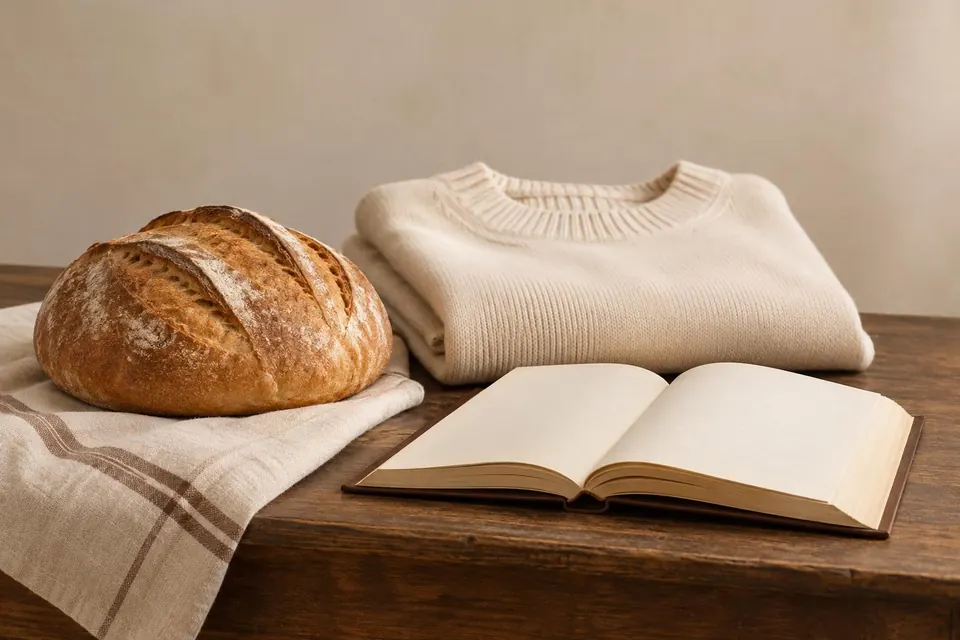
Jacob’s request for food and clothing teaches that material needs can support a life devoted to Torah.
In brief
- Jacob asked God for food and clothing on his journey.
- Material necessities make it possible to devote oneself to Torah.
- A livelihood is a means to an end, not an end in itself.
- Rabbi Chaim Ozer Grodzinski showed concern for a young refugee’s basic needs.
Parashat Vayetzei#
“If God will be with me, protect me on the journey I am taking, give me bread to eat and clothing to wear, and bring me back in peace to my father’s house, then the Lord will be my God” (Genesis 28:20–21).
The name Elohim (God) represents the attribute of judgment. Our forefather Jacob was saying that if he had everything he needed to live, he was prepared to commit himself to serving the Almighty at the highest level, according to the attribute of judgment.
This reveals an important principle. Pirkei Avot (Ethics of the Fathers) says: “If there is no flour, there is no Torah” [Mishnah Avot 3:17]. If a person has nothing to eat, how can they study Torah? Sforno writes that Jacob blessed Zebulun, who was engaged in business, before Issachar, who devoted himself to Torah, because a person cannot study Torah without having everything they need. For the same reason, Sforno says, the priestly blessing begins, “May God bless you” with possessions “and protect you” from loss. Only afterward does it say, “May God shine His face upon you”—with the light of Torah [Numbers 6:24–25]. For if there is no flour, there is no Torah.
That is why, says the book Tzror Hamor, the Torah commands that the table in the Tabernacle, which symbolizes abundance, be built before the menorah, which symbolizes Torah. As it is said, the Torah was given to those who eat manna and those who eat terumah (the sacred portion of produce given to priests).
For the same reason, writes Abudarham, the judgment concerning the harvest is made on Passover, at the beginning of the counting of the Omer and the preparations for receiving the Torah. For if there is no flour, there is no Torah.
Rabbi Yerucham Levovitz of the Mir yeshiva said that this is part of the principle: “Prepare yourself in the hallway so that you may enter the banquet hall” [Mishnah Avot 4:16]. And as the Hasid Yaavetz wrote in his commentary on Pirkei Avot, a livelihood is necessary “as a ladder is necessary for a dovecote.” It is a necessary means, but not an end in itself.
In any case, we must look at it this way: first, take care of the “flour.” As the Talmud says: “When a guest comes to town, people ask whether he has food and drink” (Bava Kamma 92a).
I experienced this firsthand.
When the Germans seized Poland from one side and the Russians from the other, one free corner remained in this Gehinnom (hell): independent Lithuania. Many yeshiva students found refuge in Vilna. I ended up there too. I very much wanted to visit the leader of the generation, the great Rabbi Chaim Ozer Grodzinski. His close associate, Rabbi Chizkiyahu Yosef Mishkovsky, who had once been the rabbi of my hometown of Krynki, arranged a time for me: eleven o’clock the next morning. I was so excited that I stayed awake all night reviewing the tractate Yevamot, so I would remember what I had studied. If he asked me, I didn’t want to stumble over my words. I wanted to be able to say right away, “Fifteen women ...” [Mishnah Yevamot 1:1], and so on.
I arrived on time. About 30 people were waiting in line, each with their own troubles. Suddenly the door opened, and Rabbi Mishkovsky called me in. I could barely breathe from excitement: I was about to see the leader of the Jewish people.
I was sure the first question he would ask me would be, “What are you studying now?” The second: “What new things have you learned?” And the third: “What else new have you learned?”
Instead, he asked me three different questions.
The first was, “When was the last time you received a letter from your parents?” I answered, “It’s been six months since we lost contact.” They had remained on the Russian side, while we had fled to Lithuania from the German side.
The second question was, “Do you have a blanket?” He didn’t ask where I slept. Many people had nowhere to spend the night. We slept on benches in the synagogue. But without a blanket, you could freeze to death. I answered that I had one. The rabbi was glad to hear it.
The third question was, “May I see your shoes?” I was very embarrassed, but I had no choice. I lifted my patched pants, and my shoes appeared in all their “glory.” They were torn and badly worn.
The rabbi immediately gave me money for new shoes and said, “My home is your home. It’s open to you 24 hours a day.”
When I heard that, I was overwhelmed. I couldn’t hold back and burst into tears. I felt that someone cared about me.
The rabbi didn’t ask me questions about what I had studied. What mattered to him was helping me. Such were the great people of Israel.
By Rabbi Yaakov Galinsky
Keep reading
More →Why Was the Manna a Test?
In Parashat Eikev, the manna reveals that abundance can be a test as well as a blessing.
Guide · Work and MoneyWhen Must You Pay a Worker Under Jewish Law?
- Basic Principles
- The Payment Deadline
- Work Ordered From a Craftsperson
Is Wealth a Harder Test Than Poverty?
The story of Abraham and Lot offers a lesson about the spiritual challenges of poverty and wealth.
Work and MoneyWhy Did Abraham Stay at the Same Inns?
Abraham’s return journey offers a lesson about wealth and the comforts we choose.







