Shalom Aleichem: Meaning and Origin
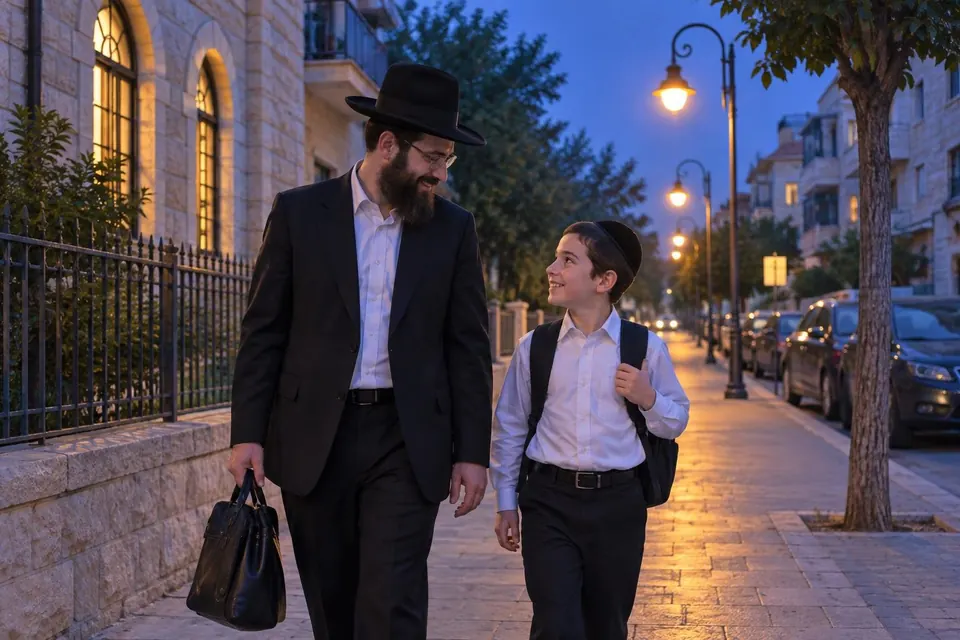
The Friday-night hymn welcomes the angels who accompany us home from synagogue.
In brief
- Shalom Aleichem appears in a 17th-century book by students of the Arizal.
- It is sung before Kiddush on Friday night.
- Its verses welcome the angels, ask for their blessing, and wish them peace as they leave.
- Some rabbis did not sing the hymn or omitted particular verses.
The Hymn and Its Origin#
This hymn first appears in Tikunei Shabbat, a book by students of the Arizal printed in the 17th century. Its author is unknown. It is sung after returning from synagogue on Friday evening, before Kiddush, while standing before the set Shabbat table and candles.
The Talmud says:
“On Friday evening, two ministering angels accompany a person home from the synagogue, one good and one bad. If they enter the house and find a lamp lit, a table set, and a bed prepared”—in Talmudic times, people reclined on a bed while eating—“the good angel says, ‘May it be [the Creator’s] will that it be so next Shabbat as well,’ and the bad angel is compelled to answer ‘Amen.’ But if not, the bad angel says, ‘May it be [the Creator’s] will that it be so next Shabbat as well,’ and the good angel is compelled to answer ‘Amen’” (Shabbat 119b).
The Chatam Sofer did not sing this hymn. He explained that today we do not consider ourselves to be on a spiritual level high enough for angels to accompany us.
Below is the song in Hebrew, with vowel markings, followed by a translation.
שָׁלוֹם עֲלֵיכֶם מַלְאֲכֵי הַשָּׁרֵת מַלְאֲכֵי עֶלְיוֹן מִמֶּלֶךְ מַלְכֵי הַמְּלָכִים הַקָּדוֹשׁ בָּרוּךְ הוּא (ג»פ)
בּוֹאֲכֶם לְשָׁלוֹם מַלְאֲכֵי הַשָּׁלוֹם מַלְאֲכֵי עֶלְיוֹן מִמֶּלֶךְ מַלְכֵי הַמְּלָכִים הַקָּדוֹשׁ בָּרוּךְ הוּא (ג»פ)
בָּרְכוּנִי לְשָׁלוֹם מַלְאֲכֵי הַשָּׁלוֹם מַלְאֲכֵי עֶלְיוֹן מִמֶּלֶךְ מַלְכֵי הַמְּלָכִים הַקָּדוֹשׁ בָּרוּךְ הוּא (ג»פ)
צֵאתְכֶם לְשָׁלוֹם מַלְאֲכֵי הַשָּׁלוֹם מַלְאֲכֵי עֶלְיוֹן מִמֶּלֶךְ מַלְכֵי הַמְּלָכִים הַקָּדוֹשׁ בָּרוּךְ הוּא (ג»פ)
Peace to you, ministering angels, messengers of the Most High, the King of kings, the Holy One, blessed be He. (Three times.)
Come in peace, angels of peace, messengers of the Most High, the King of kings, the Holy One, blessed be He. (Three times.)
Bless me with peace, angels of peace, messengers of the Most High, the King of kings, the Holy One, blessed be He. (Three times.)
Go in peace, angels of peace, messengers of the Most High, the King of kings, the Holy One, blessed be He. (Three times.)
Why Ask the Angels to Leave?#
Perhaps the most frequently asked question is why we say “Go in peace,” sending the angels out of the house. The author of the prayer book Amudei Shamayim suggests that we may be afraid the angels will see something wrong and leave of their own accord in anger. So we take a clever approach and see them out during the song. Some halachic authorities ruled that this verse should not be said.
Others, including the author of Tosefet Shabbat, explain that the angels leave anyway after accompanying a person home from synagogue. The host is simply wishing them a peaceful departure. The author of Machatzit HaShekel believes that the angels stay with a person throughout Shabbat. When we say Tzeitchem Leshalom (“Go in peace”), we are not sending them away, but blessing their eventual departure in advance.
A man once came to Rabbi Meir of Premishlan and complained that his family lacked shalom bayit (peace in the home). The rabbi told him to stop saying “Go in peace,” and everything would work out. (From Siach Eliezer HaChadash.)
Regarding the third verse, “Bless me,” the Siddur Yaavetz explains that someone leaving a companion, even one of lower standing, must first ask permission. The host takes advantage of this and tells the angels to bless him before allowing them to leave “in peace.”
This explanation seems to me to fit well with the principle that the deeds of the ancestors are a sign and a hint for their descendants. Recall how our forefather Jacob, having wrestled with an angel all night, refused to let him go until he blessed him [Genesis 32:27].
Rabbi Chaim of Volozhin’s custom was to omit the verse Barchuni (“Bless me”), because it appears to contradict one of the principles of faith: We do not ask angels for anything, since that is considered idol worship, God forbid.
The King of Kings of Kings#
In this song, God is called not simply the “King of kings,” as the phrase is usually rendered in Russian, but the “King of kings of kings.” This raises a question: Who are the second kings, and who are the third?
This title for God already appears in the Mishnah, for example in Mishnah Avot 3:1. Rabbeinu Bachya explains that malchei, the second kings, are Michael and Gabriel. They are kings over the other angels, called hamelachim, the third kings, because they are responsible for the human kings who rule below.
Rabbeinu Bachya says that this explanation spares us from having to relate God’s kingship to earthly kings, who are only clay and dirt. All their power comes from the angels, who are called kings.
There is also a simpler explanation: God is king over the “upper kings,” who in turn rule over earthly kings (Yad Yehudah).
A Guest at the Chafetz Chaim’s Table#
Rabbi Yehuda Leib Chasman, the spiritual mentor of the Hebron yeshiva, once spent the first Shabbat meal as a guest of Rabbi Yisrael Meir Cohen, the author of Chafetz Chaim. After the evening prayer, they entered the house. To Rabbi Leib’s surprise, the Chafetz Chaim did not begin with Shalom Aleichem as usual. Instead, he immediately made Kiddush, recited the blessing over bread, and ate fish. Only then did he stand up and sing Shalom Aleichem.
Rabbi Yehuda understood that there must be a reason for this unusual behavior. He asked why the Chafetz Chaim had departed from the accepted tradition and what the source of his custom was.
The Chafetz Chaim smiled and answered, “There is no source. You were surely very hungry, so I wanted you to eat your fill first. The angels aren’t hungry, and they can wait a little.” (From Sichat Kodesh Shel Talmidei Chachamim.)
Keep reading
More →How to Make Havdalah on Wine
A guide to the wine and cup used for Havdalah after Shabbat and holidays.

Keeping Shabbat During the Holocaust: Rabbi Neuwirth’s Story
Guide · ShabbatCan Women Make Havdalah?
- Wine and Women
What Can You Use for Havdalah Without Wine?
Grape juice, raisin broth, and certain other drinks may be used for Havdalah when wine is unavailable.







