For the Sin We Committed Before You Through Envy
A closer look at another person’s life can change the way we see what they have.

In brief
- The Sages teach that envy can drive a person out of this world.
- The Torah warns against coveting anything that belongs to another person.
- What looks enviable from the outside may come with troubles we cannot see.
- A Hasidic rebbe explained why he sometimes spent more time advising wealthy visitors.
Envy is the first of the feelings that drive a person out of this world (see Mishnah Avot 4:21), turning their life into Gehinnom (a place of spiritual suffering). And yet there is really no point in being envious.
Why not? The Torah says: “Do not covet your neighbor’s house. Do not covet your neighbor’s wife, his male or female servant, his ox, his donkey, or anything that belongs to your neighbor” [Exodus 20:17]. If the verse ends with “anything that belongs to your neighbor,” why does it first list the house, wife, ox, and so on?
Imagine a man living with his wife and ten children in a small three-room apartment. There’s barely room to breathe. Then one day he walks past a villa and sees a garden in bloom behind the fence. Beyond it stands a huge house with at least ten rooms. And only a couple and their two children live there. How could he not be envious?
But wait a minute. Do you know that there’s no peace in their home, that they fight every day, and that life is like Gehinnom?
“I don’t know. Who told you that?”
I don’t know either, but it’s entirely possible. So there’s no reason to be envious.
Would you want to trade lives with that rich man—including his ulcer and kidney stones? Do you know that he’s actually in debt and recently took out a loan on the black market? How do you know you should envy him? How do you know there’s anything to envy?
Don’t look only at the house, the donkey or car, the wife or housekeeper. Everything comes as a package: “anything that belongs to your neighbor.” And there are surprises, too. So, are you ready to trade? No, thank you. I’d rather keep what I have.
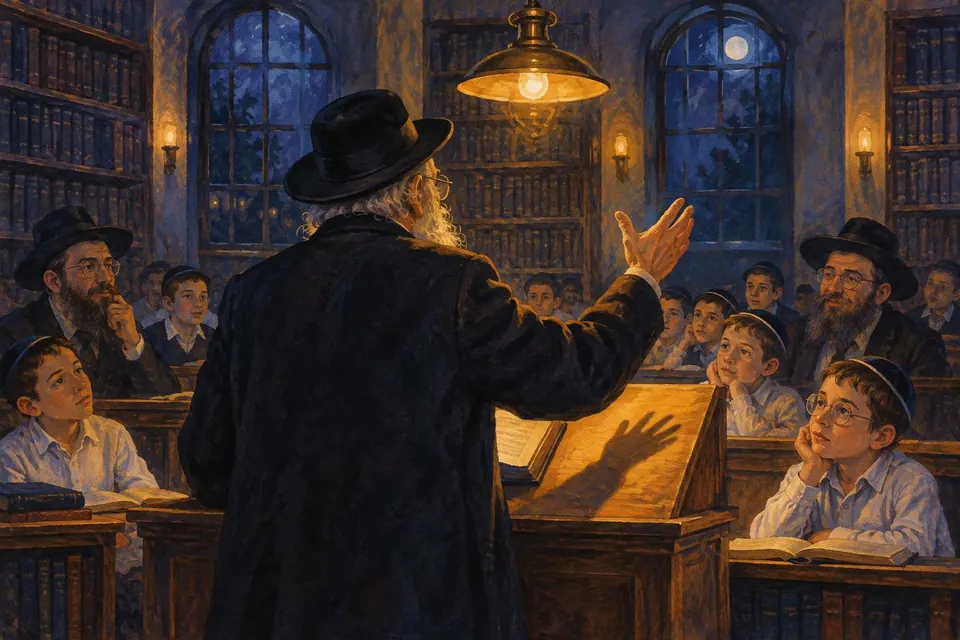
A story is told about a man waiting in line to see the rebbe of Alexandrow, Rabbi Yerachmiel Yisrael Isaac Danziger, author of Yismach Yisrael. Alexandrow-Lodzki is a town in Poland. As the man waited, he noticed something outrageous: poor people went in, gave the rebbe a note and a few kopecks, received blessings, and came right back out. But wealthy people who brought substantial sums stayed a long time, and the rebbe spoke with them at length.
The man was upset. He knew that was how the world worked. Doctors behaved that way, and people were treated the same way at the bank. But here, with a Torah scholar and a righteous man, there should be no such injustice.
When his turn came, he couldn’t contain himself and asked about it. The rebbe wasn’t angry. He smiled and replied, “Believe me, my time is precious. I wouldn’t waste it for no reason. I have other things to do: study, serve the Almighty... But I devote some of my time to helping Jews. I give them advice, bless them, and help them as much as I can.
“When a poor person comes and tells me what they need, I usually know right away what they’re lacking and what they need. I immediately give them a blessing and advice. But when a rich person comes, they usually smile with satisfaction. I ask how things are, and they say that, thank God, everything is fine. They have everything they need. But when I start asking more questions, it turns out that it’s just a mask. Lift the rug, and all the bugs come into view. There’s not much peace at home, the children are causing heartache, the business is in danger of collapse, and the house is mortgaged. How much advice and how many blessings they need!
“But understand: it takes time to discover that a rich person is also in need.”
So Whom Is There to Envy?#
Keep reading
More →How to Do Teshuvah: Practical Steps
A practical approach to making lasting commitments as part of teshuvah.
Yom KippurWhy Do We Fast on Yom Kippur?
The Yom Kippur fast invites repentance and offers a mitzvah that lasts throughout the day.
Rabbi Shalom Schwadron's Stories of Repentance and Prayer
Yom KippurWhy Is Yom Kippur a Joyful Day?
Yom Kippur brings the joy of forgiveness, renewal, and a return to Torah.







