Matot-Masei: Children or Money?
Moses challenges two tribes to reconsider what comes first: their property or their children.
In brief
- The tribes of Gad and Reuben asked to settle east of the Jordan, where there was pasture for their livestock.
- Moses corrected their priorities when they spoke of building livestock pens before cities for their children.
- Their fathers spent 14 years away while the land was conquered and divided.
- The pursuit of wealth can become consuming, and children can pay the price.
Parashat Matot#
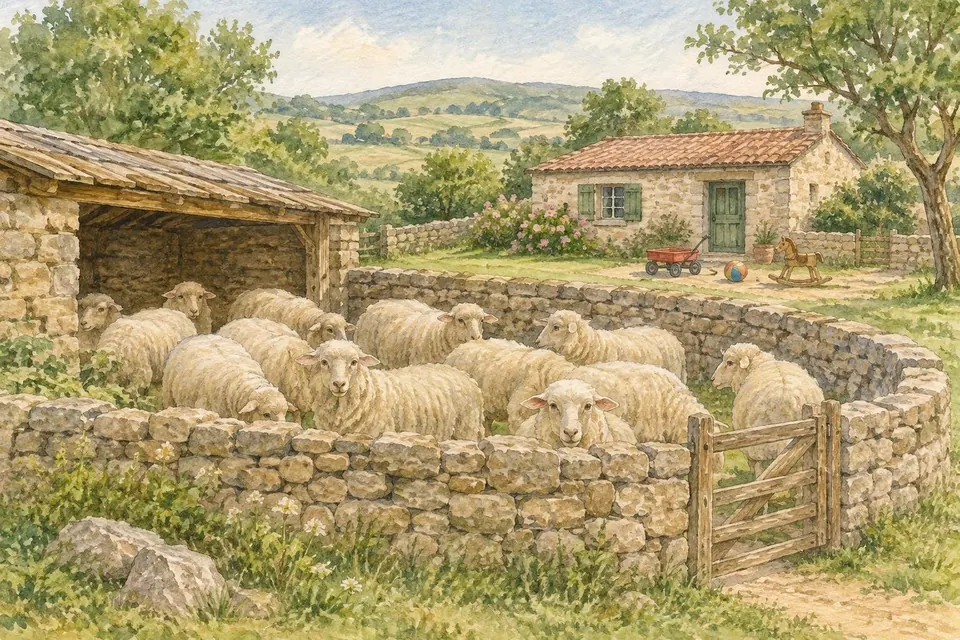
“They approached him and said, ‘We will build sheepfolds here for our livestock and cities for our children’” (Numbers 32:16).
The people of Israel had reached the plains of Moab, a kind of launching point for the conquest of Canaan. The conquest was now inevitable. But the tribes of Gad and Reuben, who owned large herds, preferred the lush pastures on the eastern bank of the Jordan to land in the Land of Israel. They asked Moses for permission to receive their portion there.
Moses rebuked them for leaving the others to fight in Canaan while they settled into their pastureland. Their unwillingness to cross the border would also demoralize the others. In this, they were no different from the spies whose report about the Land of Israel had demoralized the Jewish people 38 years earlier.
The representatives of Gad and Reuben replied: “Here is what we want to do: we will build pens for our livestock and cities for our children. Then we will join the army and march at its head, fighting until the land is conquered and divided. Only then will we return to our homes.”
Moses answered: “Build cities for your children and sheepfolds for your sheep, and do what you have promised” (Numbers 32:24).
Notice how Moses reversed their order of priorities. They wanted to build pens for their livestock and cities for their children. First came concern for the livestock. They had to make sure there were enough pens and barns so the animals would not escape, get lost in the woods, or be stolen.
Sheep and cattle are valuable property, and they need to be well cared for. Only then would they build “cities for our children”—that is, provide a place for their children to live while they went off to fight.
Moses told them otherwise: Your priorities are wrong. First, “build cities for your children.” Make sure your children have everything they need. After that, you can build pens for the livestock. Take care of the children first, and only then the animals.
The Midrash describes this difference in priorities through a verse in Ecclesiastes: “The heart of the wise inclines to the right, but the heart of the fool to the left” (Ecclesiastes 10:2). Moses’ heart was on the right; his priorities were correct. But the hearts of the representatives of Gad and Reuben were on the left, and they placed greater value on what was really secondary. They worried more about money than about their children’s well-being.
Reading about this episode today, we might say to ourselves: How foolish people can be! How distorted their values were! How could they put the well-being of livestock ahead of the well-being of their own children?
But is this case really so strange? Did it happen thousands of years ago, with no parallel in the modern world? Look around: people worry about making more money, helping their businesses thrive, earning another degree, opening their own offices. And the children? The children simply get lost in the race. Often we live in places where we cannot give our children a proper Jewish upbringing, yet we are afraid to move because we would lose money and status. We fail to realize that we are making exactly the same mistake for which Moses rebuked the tribes of Gad and Reuben.
Rashi writes that Gad and Reuben undertook to return home after the land was divided (Rashi on Numbers 32:24). In all, they remained in the Land of Israel for a long 14 years: seven years of conquest and another seven years during which the land was divided. Suppose they left very young children at home, three or four years old. How old were those children when their fathers returned? They were teenagers, young men and women. The Midrash tells us that when the fathers returned, they were horrified to see that their “little ones” had grown into young people who looked no different from their idol-worshipping neighbors.
Why did this happen? One reason is that their fathers had put protecting their property ahead of caring for their children’s spiritual growth.
The Ktav Sofer also draws attention to the end of Moses’ statement: “Do what you have promised.” Was this really necessary?
The answer is that Moses knew very well whom he was dealing with. People who could think first about their livestock and only afterward about their children cannot always be trusted. They devote so much attention to protecting and increasing their property that they will go to great lengths for it. That is why Moses reminded them once more that they had to keep their promise.
Rabbi Tzadok HaKohen explains that the desire for money is stronger than any other desire because it is the only one that is never fully satisfied. There are limits to how much a person can eat and the like, but there is no limit to how much money a person can want. The pursuit of wealth becomes more obsessive than any other desire. And too often, children become its victims.
By Rabbi Yissocher Frand
Keep reading
More →Devarim: Knowing When to Say No
The story of the spies offers a lesson about when children are ready to hear a refusal.
FamilyHow Much Must You Honor Your Parents?
Parashat Vaetchanan and a Talmudic story reveal the depth of the mitzvah to honor parents.
FamilyIs Hospitality Greater Than Greeting the Shechinah?
Abraham’s rush to welcome travelers offers a window into the greatness of hospitality.
FamilyChovat Hatalmidim: Revealing a Child’s Soul
The Piaseczner Rebbe explains how education can nurture each child’s individual nature and spiritual potential.







