Chukat: Love People and Bring Them Closer to Torah
Aaron’s kindness inspired people to change, and his example lives on in the story of a devoted student.
In brief
- All of Israel mourned Aaron, who was known for making peace and welcoming everyone.
- His kindness inspired people who had sinned to repent.
- Harry Wolpert faced the threat of losing his job for keeping Shabbat in America.
- His teacher’s love helped him resist the temptation to work on Shabbat.
Parashat Chukat#
Avot deRabbi Natan repeats a point we mentioned earlier in connection with this week’s Torah portion. When Aaron died, all the people of Israel, both men and women, mourned him. But when Moses died, the text says that only the men, the sons of Israel, mourned.
The people of Israel had a different relationship with Moses than they did with Aaron. Moses guided the people along the right path, which was not always pleasant or easy, and his decisions were often uncompromising.
Aaron, unlike Moses, never criticized. He was known for his mission of making peace, and everyone loved him for it. He greeted even those who had strayed and those who were wicked with a smile. He did not accuse them; on the contrary, he had a kind word ready for everyone.
Remarkably, Aaron’s approach bore fruit. After being treated this way, people who had done wrong would ask themselves, “How can I go on sinning? It would upset Aaron!” The Midrash says that through his kindness and unconditional acceptance of every person, Aaron brought many people to repent of their wrongdoing and do teshuvah. Notice that it was not rebuke or fear of punishment that brought them to repentance, but a love of peace. That was the secret of everyone’s love for Aaron.
[Editor’s note: This does not mean that Aaron was greater or better than Moses, or that Moses loved people any less. Our teacher Rabbi Elazar Menachem Shach explained that Moses, as leader of the people, could not act as Aaron did.]
In our own time, thank God, there are followers of Aaron too. The following story is about one of them.
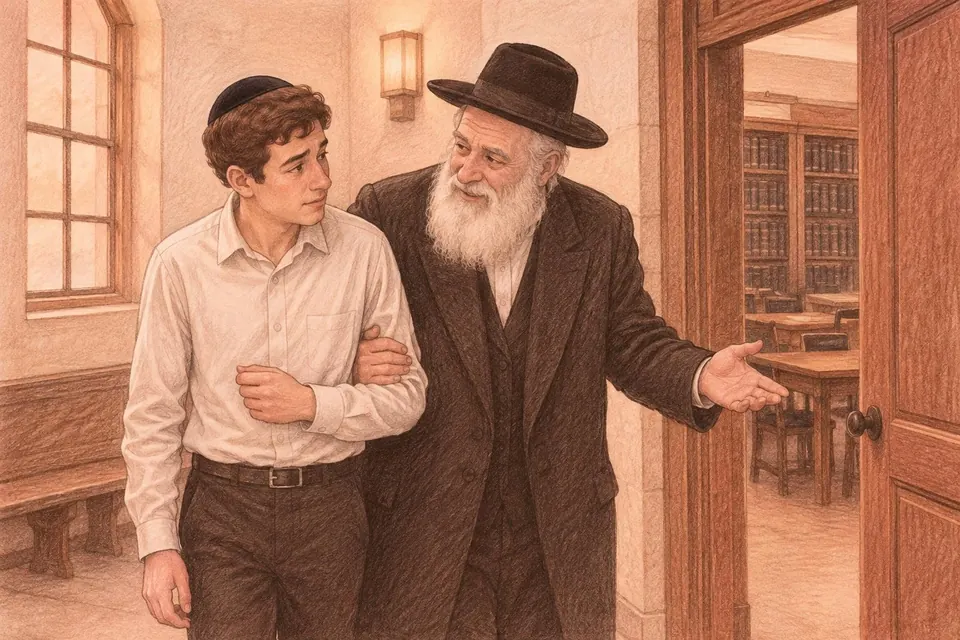
Mr. Harry Wolpert was one of those who supported a Baltimore yeshiva financially for many years. He was a devoted student of the great Rabbi Baruch Ber Leibowitz, head of the Kamenetz yeshiva. When Mr. Wolpert came to America, he faced a serious test again and again: the pressure to violate Shabbat. It is hard to imagine today, but in those years the job market could be summed up this way: If you don’t come to work on Saturday, don’t bother coming back on Monday.
Mr. Wolpert had more than himself to feed. His wife and children depended on his earnings for their food. Many times he was tempted to violate Shabbat, but he remained steadfast. And what do you think helped him in his struggle to remain a righteous Jew? The image of his teacher, Rabbi Baruch Ber.
Rabbi Baruch Ber won the hearts of hundreds, if not thousands, of students through his boundless love and forgiveness. He treated every student warmly, and it was that love, felt by each of them, that stopped Mr. Wolpert time and again from violating Shabbat.
By Rabbi Yissocher Frand
Keep reading
More →Vaera: The Soccer Player and the Magician
A story about a soccer player helps explain why seeing something can affect us more deeply than knowing it.
CharacterLashon Hara and Free Speech: Life and Death in the Tongue
Jewish teachings on the power of speech challenge us to consider how we use our words.
ParashaBehaalotecha: What Makes a Response to Tragedy Cruel?
Maimonides calls it cruel to dismiss communal tragedy as simply part of life.
ParashaKorach: Who Wins an Argument?
Moses’ response to a painful accusation offers a lesson in walking away from conflict.







