Chukat: Transition Periods in Life
Rabbi Yissocher Frand explores why times of change call for special care toward ourselves and our families.
In brief
- Rabbi Simcha Zissel Broide asks why the Israelites tested God at the beginning and end of their desert journey.
- He sees those years as periods of difficult transition.
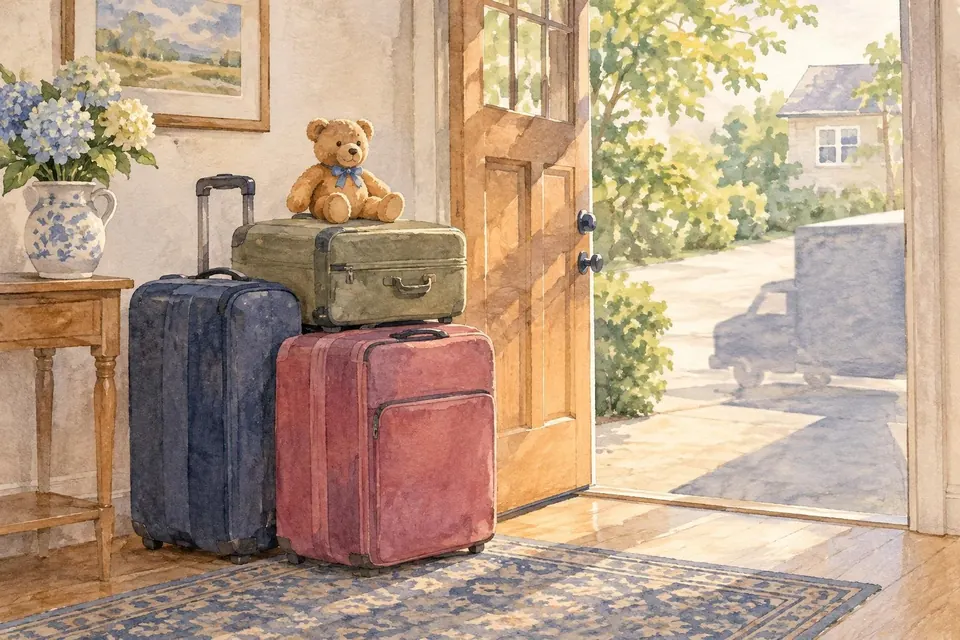
- Even welcome changes can disrupt a person's peace of mind.
- During transitions, we should take special care with ourselves and our loved ones.
Parashat Chukat#
Parashat Chukat tells us about one of the saddest periods in Moses' life. When the people came to the wilderness of Zin, Miriam died, and the camp was left without water. The people complained to Moses and Aaron, repeating their old arguments: “Why did you bring God's assembly into this wilderness, so that we and our livestock would die here? Why did you bring us up from Egypt to this terrible place? It is no place for grain, figs, vines, or pomegranates, and there is no water to drink” (Numbers 20:4–5).
Something in Moses' response to this accusation was inappropriate—so much so that he lost the opportunity to enter the Land of Israel. Rabbi Simcha Zissel Broide asks an interesting question. According to Nachmanides (the Ramban), the story of Korach took place immediately after the story of the spies. That means everything described in the portions of Shelach and Korach happened in the second year after the Exodus from Egypt. The events of Chukat, however, take place in the 40th year after the Exodus, some 38 years later. The people of Israel are now on the verge of entering the Holy Land.
Everything we read about earlier—all the problems and complaints—happened during the Israelites' first 18 months in the wilderness. Yet the episode at Mei Merivah (the waters of contention) in Chukat took place in the 40th year. Rabbi Simcha Zissel asks: What did these events have in common?
We can find an answer in the Mishnah in Avot and in the Talmud in Arakhin: for all 38 years between these events, the Israelites behaved perfectly. We can see this by reading Mishnah Avot 5:4, which speaks of 10 particular “tests” with which our ancestors tested God in the wilderness, citing the verse: “They have tested Me these ten times” (Numbers 14:22). The Talmud in Arakhin (15a) discusses these 10 tests in more detail: two at the Red Sea, two involving manna, two involving quail, two involving water (one at Rephidim and one at Mei Merivah), one involving the golden calf, and one in the wilderness of Paran (involving the spies). All of these happened in the first year and a half, except for Mei Merivah, which occurred at the end of their journey. Rabbi Simcha Zissel concludes that for 38 years there were no tests or complaints, and the Jewish people as a whole behaved in the best possible way.
That conclusion makes sense when we consider that the wilderness generation is called the “generation of knowledge” (dor deah). The community ate only manna, lived surrounded by the Clouds of Glory, and studied Torah under Moses' guidance for 38 years. They did not have to worry about food, new clothes, or a good job. They could devote their entire lives to spiritual growth.
If that was the case, Rabbi Simcha Zissel asks, what happened in the first two years and in the last, 40th year? What led the people of Israel to test the Almighty?
Rabbi Simcha Zissel offers an insight into human psychology that can be extremely helpful in our relationships with loved ones, especially our children. The first years and the last year in the wilderness were times of transition for our people. The Israelites left Egypt, where they had been slaves, and soon afterward became the chosen people. Their rise from the 49th level of impurity to receiving the Torah was a year of tremendous spiritual renewal and a change in their entire way of life.
At the end of their journey, in the 40th year, the people faced another difficult transition before entering the Land of Israel. They would have to move from living on manna to a “normal” life—the kind of life they had lived before and would live in all the years to come. Soon they would have to plow, sow, harvest, buy and sell, and provide for their families. This, too, was a period of transition.
During a transition, we should not expect a person to be stable, calm, and balanced. When an entire people undergo sudden change, those who lack peace of mind do not always respond thoughtfully to what is happening. It is precisely this lack of calm that pushes people to make strange decisions and foolish mistakes.
Rabbi Simcha Zissel's lesson is that we must be especially careful when we are about to enter a new stage of life, even when the changes are inevitable and for the better. Young men in yeshivas, for example, spend much of their time as students in just such situations: they are about to begin meeting prospective brides, or they are dating a young woman, or they have just become engaged and are preparing for a wedding, or they have just married, or are preparing to become fathers, or are new fathers themselves.
Each of these stages brings considerable stress and a sweeping transition from one state of life to another. When they follow one another in rapid succession, emotional stability can be hard to come by. These changes are wonderful in themselves, but they are still changes, and each one takes away some measure of a person's calm. When changes come at us from all sides, we lack yishuv hadaat (peace of mind). It is in just such situations that we need to be especially attentive to ourselves and our loved ones.
By Rabbi Yissocher Frand
Keep reading
More →Acharei Mot–Kedoshim: The Advice of a True Doctor
A Torah perspective on medical advice, hope, prayer, and the difficult work of giving and receiving warnings.
ParashaShelach: True Greatness Is Not Arrogance
The spies’ report offers a lesson in self-confidence, dignity, and humility.
ParashaChukat: Appreciate Your Loved Ones
The Song of the Well offers a lesson about recognizing the people we take for granted.
ParashaBalaam and Rabbi Yose ben Kisma: A Lesson About Greed
Three explanations reveal the difference between two seemingly similar responses to wealth.







