Vaera: How Anger Leads to Trouble
The plague of frogs offers a lesson in how anger can turn a small problem into a much larger one.
In brief
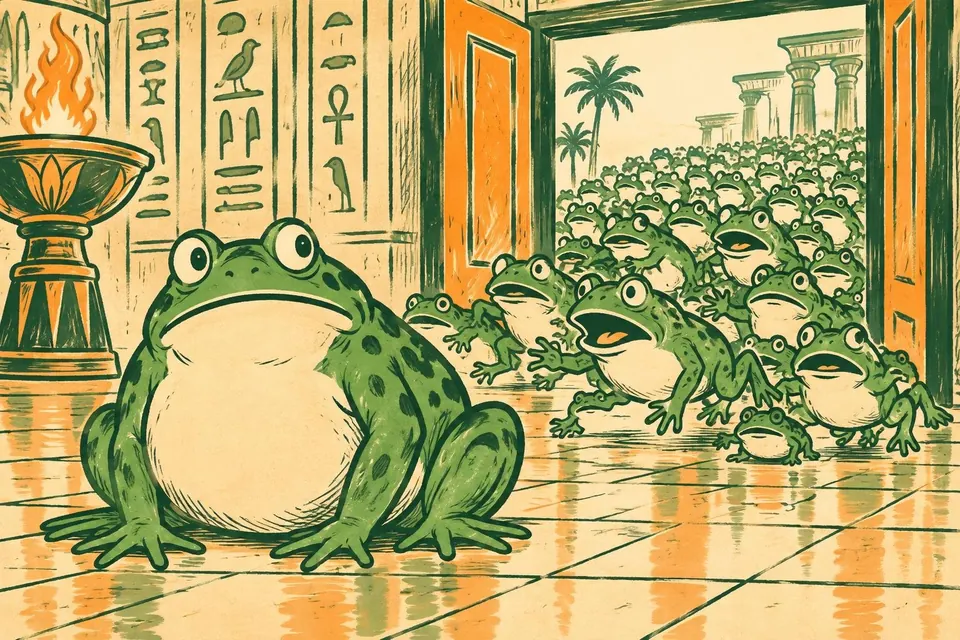
- Rashi describes how the Egyptians struck a frog, only to bring forth many more.
- The Steipler explains that their anger drove them to keep striking it.
- Anger can make a disagreement or a small frustration grow.
- Patience and composure make life's troubles easier to bear.
Parashat Vaera#
“The frog came up” (Exodus 8:6).
“There was one large frog. The Egyptians struck it, and it produced swarms of frogs” (Rashi on Exodus 8:6).
Rabbi Yaakov Yisrael Kanievsky, the Steipler, offers a striking insight into this verse in his book Birkat Peretz. When the Egyptians saw that striking the large frog caused it to split into a huge number of frogs, they should have stopped at once, so that no more would appear.
But what actually happened? That is the nature of anger: if the frog keeps brazenly “throwing out” more and more frogs, then all the more reason to keep hitting it and take revenge. The more frogs appeared, the more fiercely their anger burned, and the more they struck it. It split into still more frogs, until they “covered the land of Egypt” [Exodus 8:6].
This is what happens to anyone overcome by anger. If someone hears an insult and remains silent, things will gradually settle down and their anger will subside. But once they start answering back, it can go on forever. The more they shout at the other person, the more that person will shout back. Reason suggests that it is best to ignore the person upsetting you and remain silent. But anger says, “How can you keep quiet when someone says that to you?” So you answer, your opponent hears you and adds new complaints, and each of you wants to get back at the other. It ends just like the plague of frogs in Egypt.
In fact, the plague of frogs and the way it unfolded teach us a general principle. The Egyptians brought all the plagues upon themselves through their stubbornness and bad character traits. Had they listened to reason and submitted to the Creator's will, they would have avoided the troubles that followed. But their anger and pride were so great that they suffered blow after blow. In the end, they were even willing to enter the sea that had split before their eyes in a great miracle—and ultimately they all drowned.
The same is true of each of us: a small problem appears in our lives, and we blow it up to the size of an Egyptian plague.
In truth, any plague, any trouble in the world, can be endured without even losing the joy of life, if we have a little patience and composure. As King Solomon said in Proverbs 18:14: “A person's spirit can sustain them in sickness, but a broken spirit—who can bear it?” When a person's spirit is broken, they have no strength to withstand trouble. And who did this to them? They did it to themselves.
Suppose someone says a few words against you, or you have to stand in line for another five minutes because someone cut ahead, or something of the kind. No harm would come to you if you did not dwell on it. But when you refuse to forgive and focus on all these “injustices,” they turn into hours of irritation and a waste of precious time, at the expense of your work, study, and prayer. This is just what King Solomon meant: “A person's foolishness ruins their way, and their heart rages against God” (Proverbs 19:3).
When we accept whatever happens calmly, patiently, and with composure, life becomes far more pleasant and sweet.
By Rabbi Shimshon Pincus
Keep reading
More →Vaera: The Soccer Player and the Magician
A story about a soccer player helps explain why seeing something can affect us more deeply than knowing it.
CharacterLashon Hara and Free Speech: Life and Death in the Tongue
Jewish teachings on the power of speech challenge us to consider how we use our words.
ParashaBehaalotecha: What Makes a Response to Tragedy Cruel?
Maimonides calls it cruel to dismiss communal tragedy as simply part of life.
ParashaKorach: Who Wins an Argument?
Moses’ response to a painful accusation offers a lesson in walking away from conflict.







