Why Did Tamar and the Righteous Suffer?
Parashat Vayeshev explores suffering, patience, and the hope of redemption through the stories of Joseph and Tamar.
In brief
- Joseph and Tamar suffer isolation and suspicion, yet retain their composure.
- The many days they spend waiting and suffering can plead on their behalf.
- Tamar’s pain and years of waiting are connected to the greatness of her descendant, King David.
- The Messiah is for those who wait faithfully for his coming.
Parashat Vayeshev has a name that suggests tranquility: “And he settled” in peace. Yet no one in the portion sits peacefully. Everyone suffers: Jacob, Joseph, Judah, Reuben, Tamar. What does this mean? Could we, God forbid, accuse the Torah of cynicism—of speaking as if people were at peace when they were actually in anguish?
Calm Amid Suffering#
Amid all the twists and turmoil, the portion shows us two great people who suffer terribly and are surrounded by estrangement: the righteous Joseph and the righteous Tamar. Both are isolated, disliked, and suspected of things they did not do. Yet through all the evil around them, they retain yishuv hadaat—a clear and calm mind. Vayeshev is about them. They could have taken revenge, cried out, complained, or accused others.
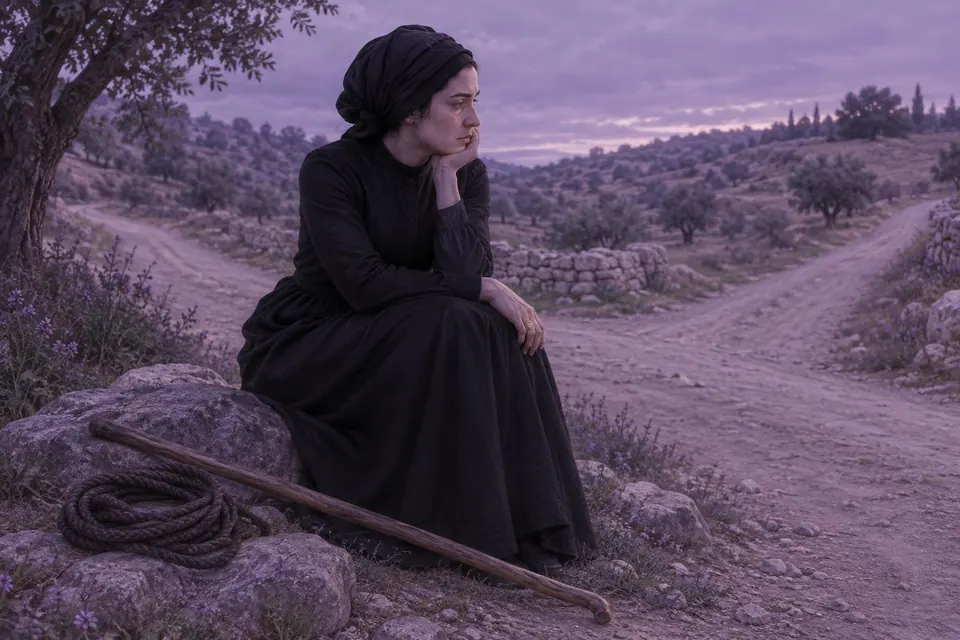
Tamar acts in keeping with her name: she is metameret, transforming and regulating her inner tension. As she is being led out to be burned, she speaks so calmly: “I am pregnant by the man to whom these things belong.” She sends Judah the seal, cords, and staff. If he wants to admit it, he will; if he does not, he will not. Where does such extraordinary calm come from?
The secret of this calm and clarity lies in our portion. These people know how to wait, day after day—yamim rabim, many days. This expression recurs throughout the portion.
Joseph disappears, lost to his father. Jacob weeps for him for many days. Joseph is thrown into a pit and, some time later, into prison for 12 years. That is a great many days. In the language of the Torah, yamim rabim—many days—means many years.
Tamar’s two husbands, Er and Onan, die, and Judah tells her, “I will give you my third son, Shelah, when he grows up. Return to your father’s house.” And many days pass—once again, many years go by.
These people know how to wait. Waiting is one of the hardest things to do, especially when you have been treated unjustly. Wait yamim rabim. The Zohar says: “Do not read yamim rabim, ‘many days’; read yamim ravim, literally, ‘days that quarrel.’” The days will contend on your behalf, so stop quarreling and stop thirsting for revenge. Stop being foolish, like Pharaoh’s cupbearer and baker. They have dreams and immediately want them explained and their problem resolved. For a dream to come true, one must wait many days, because those days will argue your case for you.
The Days That Plead for Us#
This needs explanation. The Zohar says: “Every day Rachel stands and ‘argues’ with God, saying to Him, ‘Look at the trouble this daughter of mine is in. Your Torah says that he must not deprive her of food, clothing, or marital intimacy’” (Exodus 21:10). Why, Rachel asks, is her life so terrible? She should have a peaceful home, a loving husband, and children who bring her joy. Why is she deprived of all this? God answers: “But she is not entitled to it. There is a gezerah—a decree—or a gilgul, a repair of a previous incarnation.”
We see from this that people suffer because of previous incarnations, as those versed in Jewish mysticism explain. Jacob does not suffer for nothing: he repairs part of the sin of Adam, the first human being. He is Adam’s “beauty.” But we will not go deeper into this; these are difficult things to understand.
Sometimes we are not entitled to salvation, given our spiritual level and our merits. But what can still save us? Or HaChaim asks this question and answers, drawing on the Zohar: “The many days you spent suffering.” On one side of the scale, God places your sins or the decree issued against you, God forbid. On the other, He places all the days you spent in sorrow. And they outweigh the rest.
Tamar’s Pain and David’s Greatness#
We see this with remarkable clarity in our portion. Tamar saw that Shelah had grown up, yet she had not been given to him in marriage [Genesis 38:14]. “Wait a minute. I was promised I would marry him, and now he is grown—and nothing?”
Baal HaTurim, the great commentator, looks for other places in the Hebrew Bible where the words ki gadal—“for he grew” or “for it was great”—appear. He finds three instances. The first is in this portion: Shelah grew up. But Tamar, too, is grown; she is no longer young. Who will marry her? Besides, people already know unfortunate things about her: two of her husbands have died. The first use of the expression, then, speaks of time and age.
The second is in the book of Job. Suffering surrounds Job on every side, and his friends come to visit him:
When they looked up from a distance, they did not recognize him. They raised their voices and wept. Each tore his robe, and they threw dust toward the sky over their heads. They sat with him on the ground for seven days and seven nights, and no one spoke a word to him, for they saw that his pain was very great (Job 2:12–13).
They could not even offer him words of comfort, because his pain was so great. The second use of ki gadal speaks of pain.
And if your time has come and your pain has grown, then you will receive the third ki gadal: “King David grew greater and greater, until he became exceedingly great”. The Messiah, son of David, will descend from you. Tamar, you are not young, and your pain is great. The magnitude of your sorrow and all the days you spent suffering will plead for you in Heaven. That is why King David will descend from you; from you will come salvation.
The Messiah is for those who wait—for all those who faithfully await his coming with complete clarity of mind, without protest or revenge, without rebelling against the decree given to them in Heaven.
May it be God’s will that all those who have waited so long and whose suffering is so heavy be granted the privilege of seeing the Messiah, the king, in his greatness.
Keep reading
More →Acharei Mot–Kedoshim: The Advice of a True Doctor
A Torah perspective on medical advice, hope, prayer, and the difficult work of giving and receiving warnings.
ParashaShelach: True Greatness Is Not Arrogance
The spies’ report offers a lesson in self-confidence, dignity, and humility.
ParashaChukat: Transition Periods in Life
Rabbi Yissocher Frand explores why times of change call for special care toward ourselves and our families.
ParashaChukat: Appreciate Your Loved Ones
The Song of the Well offers a lesson about recognizing the people we take for granted.







