The Value of Every Mitzvah
Even good deeds done with imperfect intentions have lasting value.
In brief
- Haran entered the fire for God's name, though his intentions were not as pure as Abraham's.
- Haran's descendants included Sarah, Ruth, and Naamah.
- Even a good deed done with imperfect intentions can bring a great and lasting reward.
- The Sages teach that doing mitzvot for other reasons can lead to doing them for their own sake.
“Haran died during the lifetime of his father Terah, in the land of his birth, in Ur of the Chaldeans” (Genesis 11:28).
Genesis is also called the “Book of the Upright” because it tells us about the forefathers of the world: their extraordinary integrity and righteousness, and their remarkable devotion to God. The Torah tells us about them so that we, too, will follow their upright ways, each of us to the best of our ability.
At the same time, the Torah also tells us about the deeds of less righteous people. It is important to pay attention to what we can learn from their actions, too. If the Torah mentions them, there must be a significant lesson in them for us.
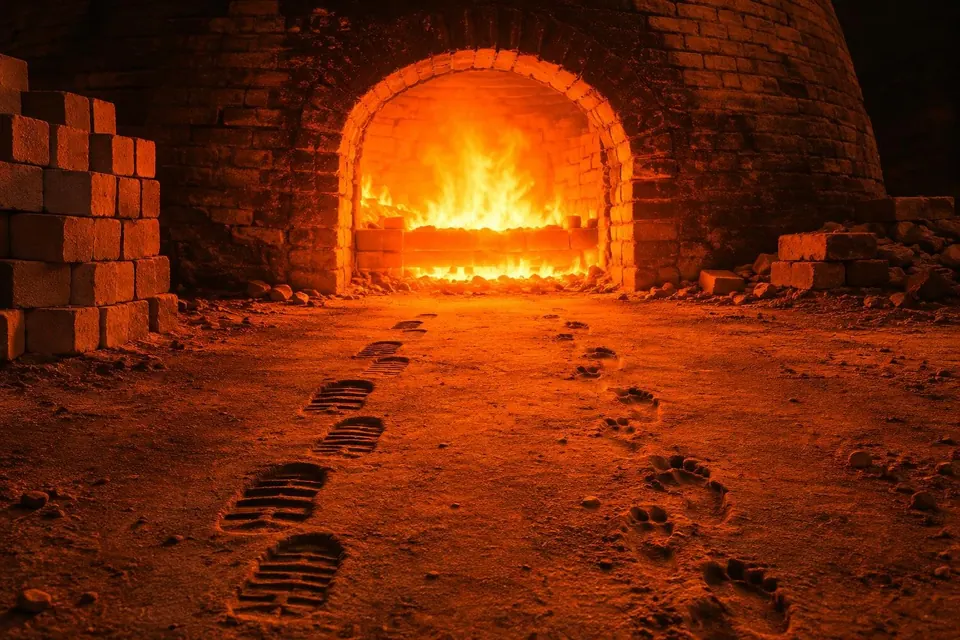
The verse above tells us about Haran, the brother of our forefather Abraham, who died “during the lifetime of his father Terah, in the land of his birth, in Ur of the Chaldeans.” Our Sages explain that when Abraham broke his father Terah's idols and King Nimrod ordered him thrown into a fiery furnace, Haran said to himself, “If Abraham wins, I'll join him, and if Nimrod wins, I'll join him” (Bereishit Rabbah 38:13).
In the end, God miraculously saved Abraham. Haran was asked, “Well, whose side are you on?” He answered, “Abraham's.” He too was thrown into the burning furnace, and he was burned to death.
Our forefather Abraham gave himself over for the sake of Heaven and was therefore saved. Haran, whose efforts were not as fully for the sake of Heaven, did not merit a miracle and was burned.
Still, we need to understand: Could it be that God rewarded Haran? His intentions were not as pure as Abraham's, of course, but in the end, he entered the fire for the sake of the Creator's name.
We know who Haran's children were: Sarah, the matriarch of the entire Jewish people, and Lot, whose descendants included two great righteous women, Ruth the Moabite and Naamah the Ammonite. They were ancestors of the kingdom of David and of our righteous Messiah.
From this we learn that for any good deed, even one not done with pure intentions for the sake of Heaven, God grants a person a great and eternal reward.
Sometimes Jews do good deeds, such as donating to charity or to a synagogue, or helping others, and it is clear that their intentions are not entirely pure. They may want honor and respect for what they have done. This is not the ideal way, of course, but we must not dismiss the value of such deeds. Every good deed is very, very important in God's eyes.
Our Sages have already said: “A person should always study Torah and perform mitzvot, even when not doing so for their own sake, because doing them for other reasons will eventually lead to doing them for their own sake. For as a reward for the 42 sacrifices that Balak offered to God, he merited to have the righteous Ruth among his descendants” (Sanhedrin 105b).
They also said: “A person who says, ‘I am giving this coin to tzedakah so that my son may live, or so that I may merit life in the World to Come,’ is completely righteous” (Rosh Hashanah 4a).
So even if a person does not find themselves on a high spiritual level, and does good deeds with intentions that are less pure than they would like, they should not stop doing everything they can. Our holy Sages promise that doing these things for other reasons will eventually lead to studying Torah and performing mitzvot for their own sake. In the end, that person will merit to purify their thoughts as well and reach the perfection they seek.
By Rabbi Shimshon Pincus
Keep reading
More →Acharei Mot–Kedoshim: The Advice of a True Doctor
A Torah perspective on medical advice, hope, prayer, and the difficult work of giving and receiving warnings.
ParashaShelach: True Greatness Is Not Arrogance
The spies’ report offers a lesson in self-confidence, dignity, and humility.
ParashaChukat: Transition Periods in Life
Rabbi Yissocher Frand explores why times of change call for special care toward ourselves and our families.
ParashaChukat: Appreciate Your Loved Ones
The Song of the Well offers a lesson about recognizing the people we take for granted.







