Why Is Gold So Valuable According to the Torah?
Rabbi Shimshon Pincus explores what the Torah teaches about the inherent value of gold.
In brief
- The Torah describes gold as good in its account of Creation, before people could have assigned it a value.
- An account of the Temple describes an elaborate process for refining its gold.
- The author associates gold with a higher kind of fire that brings only good.
- He suggests that gold’s value comes from its essentially heavenly nature.
“Gold, silver, and copper” (Exodus 25:3).
The Value of Gold and Gems#
Around the world, people generally assume that gold is expensive because that is the accepted convention. It is a rare metal, so people decided that it should be valuable. If that is the case, a time could come when people no longer value it, and it will be worth no more than the stones beneath our feet.
The same is true of precious stones: Their high price is simply the result of a human agreement, particularly because they are very rare and difficult to extract.
We find similar statements in Duties of the Heart and other early works of mussar (ethical teaching). Of course, we cannot disagree with them, God forbid. Still, it seems that the reason gold and diamonds are expensive is not merely external. These things also have absolute value in and of themselves.
We find proof of this in the account of the beginning of Creation. If the value of gold were determined solely by agreement among people, the Torah should have mentioned it only after human beings were created and societies established, since only then would it have acquired value and importance. Yet we see that the account of Creation already says that gold is good [Genesis 2:12]. Clearly, God built great value into gold from the very beginning of Creation. This is conclusive proof, and we therefore need to understand what that value means.
Concerning precious stones, Rabbeinu Bachya explains that the 12 precious stones on the high priest’s ephod (breastplate) were of this kind (Rabbeinu Bachya on Exodus 28:15). He says that they were the most precious stones in the world and that they possess particular segulot (properties that can bring benefits in different situations). On a deeper level, this means that every thing has something like a soul: a spiritual spark that gives it existence. One stone differs from another because of the particular qualities of its “soul.” A stone whose “soul” has additional virtues can be useful for various segulot.
The Temple’s Gold#
Gold, however, is a somewhat different matter. Shevet Yehudah tells the story of a non-Jew who visited Jerusalem and went to the Temple. The kohanim (priests) told him that all the Temple vessels were made of a special gold. To produce it, they melted gold for a very long time, until absolutely all the impurities burned away. A hundred ingots of ordinary gold yielded only one ingot of purified gold.
Everything in the world consists of four elements: earth, water, air, and fire. In the Temple, they purified the gold of the element of earth, so that only water and fire remained, and it shone like the sun and the moon.
The Sages also describe this process: “Solomon made ten golden menorahs. For each one he brought a thousand ingots of gold, and they refined them in a furnace a thousand times, until one ingot remained” (Menachot 29a).
From the story above, we learn something interesting: The gold was refined so many times not merely to cleanse it of impurities, but to separate it from the element of earth. Yet if the element of earth disappeared and only fire, air, and water remained, the gold should have shone like a flame. Why does the account specifically say it shone like the sun and the moon? Where did that radiance come from?
A Higher Fire#
Gold is more valuable than silver, and there is ample evidence of this in the Torah. We need to understand why. Silver is close to white, which symbolizes the attribute of kindness, while gold is close to the attribute of judgment, which is symbolized by red. Why, then, is gold more valuable than silver, when kindness is a higher attribute than judgment?
We can explain this in light of the Talmud’s teaching that there are several kinds of fire, and that the fire of the higher worlds is called “fire that consumes fire” (Yoma 21b). In our world, fire does much good: It provides warmth and light, cooks food, and so on. But it also has a dangerous, destructive power. As the Mishnah teaches, fire is one of the four basic categories of damage (Mishnah Bava Kamma 1:1).
Fire makes no distinctions; it burns both the good and the bad. Fire symbolizes the attribute of judgment, which punishes the wicked for the good of the world. At times, when their deeds warrant it, judgment also affects good people, making no distinction between the righteous and the wicked.
The higher fire, which is the higher attribute of judgment, also burns. But it does not burn like a destructive fire. On the contrary, when adverse judgments arise, it flares up, as it were, and consumes the fire of judgment, canceling those adverse judgments. This is “fire that consumes fire.” Such fire is therefore always for the good.
Even in our lowly world, there is something like it: the heavenly bodies. Ancient philosophers disagreed about whether they, too, belong to the element of fire or are a different, fifth element, in addition to fire, water, air, and earth.
It seems that both approaches are correct. It is indeed fire, but a different kind of fire. In terms of our world, we can call it “higher fire.” And so we actually see that the sun causes very little harm. Although it sends an incredibly vast amount of heat to Earth, virtually all that heat brings good and benefit. The stars, all the more so, cause no harm at all, since the essential property of higher fire is only to bring benefit and good.
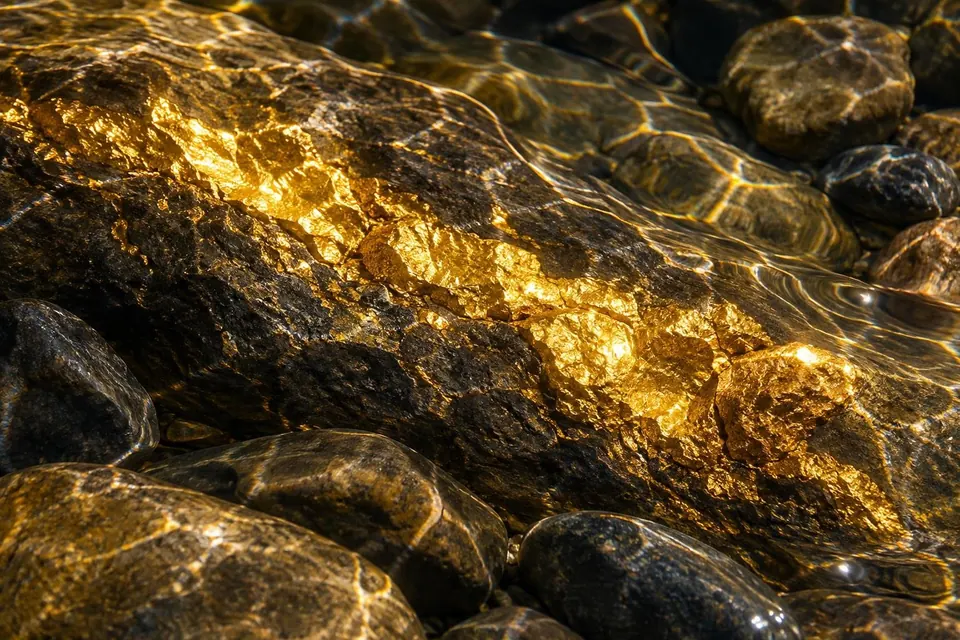
From this we can also understand the essence of gold. If everything consists of the four elements, the element of fire is especially strong in gold, which is why it has a reddish tint. But the fire within it is not the fire of our lower world. It is a natural higher fire, the fire of the heavenly bodies. That is why, as Shevet Yehudah says, when the element of earth was removed from the gold and only fire remained, it began to shine like the sun and the moon. This is the source of gold’s great value: It is, as it were, a heavenly object that essentially does not belong to this world at all.
This is also why gold is more valuable than silver. Although the quality of kindness is stronger in silver, the higher fire is stronger in gold, and that fire is on a higher level than kindness.
By Rabbi Shimshon Pincus
Keep reading
More →Acharei Mot–Kedoshim: The Advice of a True Doctor
A Torah perspective on medical advice, hope, prayer, and the difficult work of giving and receiving warnings.
ParashaShelach: True Greatness Is Not Arrogance
The spies’ report offers a lesson in self-confidence, dignity, and humility.
ParashaChukat: Transition Periods in Life
Rabbi Yissocher Frand explores why times of change call for special care toward ourselves and our families.
ParashaChukat: Appreciate Your Loved Ones
The Song of the Well offers a lesson about recognizing the people we take for granted.







