Pinchas: Going Against the Crowd
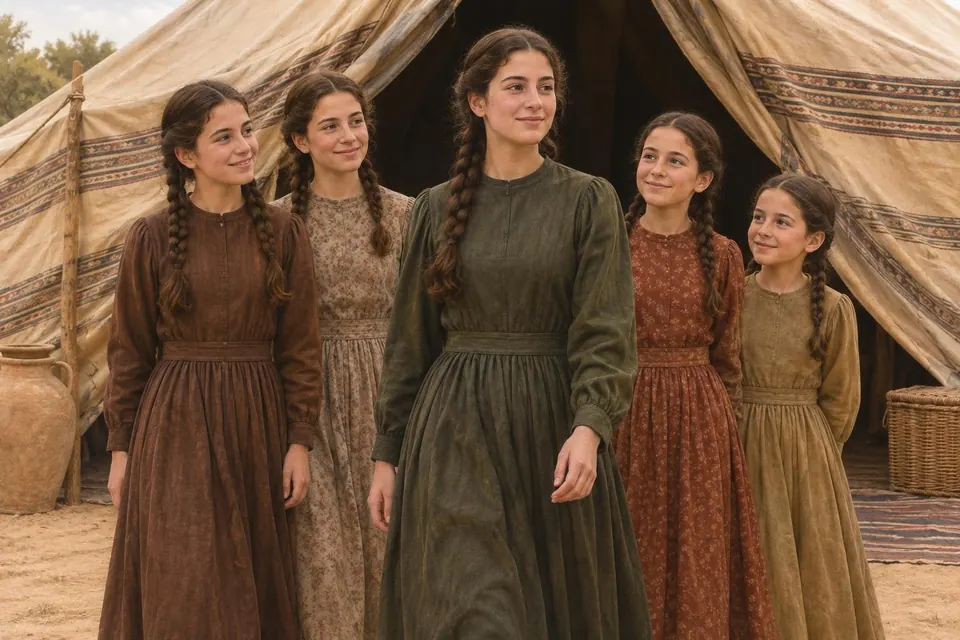
The daughters of Zelophehad showed courage and faith by seeking a place in the Land of Israel.
In brief
- The daughters of Zelophehad asked Moses about their father's inheritance.
- The Midrash says they received the reward of their entire generation.
- While others wanted to return to Egypt, the daughters trusted in the future God had promised in the Land of Israel.
- A seemingly simple act can reveal great courage when understood in its historical context.
Parashat Pinchas#
One of the significant events in this week's Torah portion is the story of the daughters of Zelophehad, who came to Moses with a question about their father's inheritance. According to Jewish law, sons, not daughters, inherit from their father. Zelophehad had died without sons; his only children were daughters. They came to Moses worried about their future: under the existing law, they would be left without a portion in the Holy Land. They did not want their family's portion in the Land of Israel, promised by the Creator, to be lost forever. Moses did not know what to do, but God revealed to him that if a man died without sons, his daughters would inherit from him.
The Midrash says that there are times when one person receives the reward of an entire generation. Noah did not join in the sins of his generation, and he received all the reward intended for the people of his time. Abraham went against everyone else and was rewarded with everything that would have gone to his generation. Lot stood against the people of Sodom and received all their reward.
The Midrash says that the daughters of Zelophehad also received the reward of their entire generation. What was so great about what they did? We know that Noah spent 120 years urging the people of his time to change their ways. Abraham was thrown into a fiery furnace because of his belief in the one Creator. Lot resisted the degradation that surrounded him in Sodom. Can we say anything similar about the daughters of Zelophehad? They seem to have stood up for their rights. What was great or heroic about that?
The Midrash explains: remember the times in which they lived. Everyone around them was complaining: “Let's go back to Egypt. This whole exodus has been a failure! Nothing but trouble has come our way. We should have stayed where we were.” Moses was struck by the question these young women brought him. Their interest in the Land of Israel and their sincere desire for a portion there were completely different from what he heard every day in the camp.
The daughters of Zelophehad were determined. They said, “We don't care what everyone around us is saying. We know that the Land of Israel is our future, the future of the entire Jewish people!” At the very moment when everyone had forgotten the Torah and was thinking only about fish and flatbread, the young women came with a lofty question—and were heard. The Written Torah reveals their inner world to us. They did not come to stand up for their personal rights. They had kept their faith and their trust in the Creator's words.
The Midrash teaches us a simple but very important lesson. We must never judge what people do and say as isolated words and actions, but always in their historical context, in light of the time and circumstances. If the Jewish people had been studying Torah and counting the days until they entered the Holy Land, there would have been nothing extraordinary about coming forward to claim a share of the inheritance. But there are times—and the moment described in this week's portion is one of them—when a simple act reveals a person's inner greatness.
Everyone around them was talking about how dangerous and terrible the Land of Israel was, and how good life had been in Egypt. The young women went against the crowd, following their faith. Was that not their true greatness?
Let us learn the lesson too. Sometimes, given the time and place, even the simplest deeds can become acts of great courage. The action of the daughters of Zelophehad was one of them. Besides receiving their inheritance, they were privileged to have the laws of inheritance revealed in the Torah through their merit. Their names are part of the Written Torah, and it is no accident that the Midrash places them alongside Abraham.
By Rabbi Yissocher Frand
Keep reading
More →Acharei Mot–Kedoshim: The Advice of a True Doctor
A Torah perspective on medical advice, hope, prayer, and the difficult work of giving and receiving warnings.
ParashaShelach: True Greatness Is Not Arrogance
The spies’ report offers a lesson in self-confidence, dignity, and humility.
ParashaChukat: Transition Periods in Life
Rabbi Yissocher Frand explores why times of change call for special care toward ourselves and our families.
ParashaChukat: Appreciate Your Loved Ones
The Song of the Well offers a lesson about recognizing the people we take for granted.







