Passover and the Power of Renewal
Rabbi Shimshon Pincus explains how Passover offers an opportunity for a new beginning.
In brief
- Passover is a gift of renewal and an opportunity for a new beginning.
- While the Days of Awe help us change our actions, Passover offers a more fundamental transformation.
- Passover calls for a new outlook on the world, the Torah, and ourselves.
- The practices of Passover help us work toward becoming new people.
The Festival of Matzah—Passover—is a special gift that the Almighty gave us out of His great love for us. The days of Passover have a special power: renewal. As the verse says, “This month shall be the beginning of the months for you; it shall be the first of the months of the year” [Exodus 12:2]. Like the Days of Awe, the month of Nisan is a time that helps us break away from bad thoughts and habits and turn things around for the better by making a new beginning.
The essential power of the Days of Awe lies in the practical changes a person can make. By nature, we are immersed in our habits, and changing them is very difficult. It takes extraordinary spiritual strength. During these days, we are indeed blessed with great help from Heaven and given the opportunity to succeed in changing our actions.
But the days of Passover offer a deeper, more fundamental transformation: the possibility of starting over from the very beginning. It is no accident that the holy Torah begins with the story of the first human being. It could have begun with the Exodus from Egypt and the giving of the Torah, when we became a people. Rashi asks a well-known question in his commentary on the beginning of Genesis: “Rabbi Isaac said: The Torah should have begun with ‘This month shall be for you ...,’ since it is the first mitzvah given to the people of Israel. Why, then, does it begin with ‘Bereishit’—‘In the beginning’?” (Rashi on Genesis 1:1).
The story of the Exodus from Egypt is actually a direct continuation of the account of the first human being. In the portion of Bereishit, the Torah describes what the first human was like before the sin: the true and proper form of a human being. It then describes how, over the generations, that human form was corrupted.
The slavery in Egypt was a furnace for purifying the soul of the people of Israel, as the verse says: “But God took you ... out of Egypt, from the iron furnace” (Deuteronomy 4:20). Afterward, the Jews came to Mount Sinai, where the form of the perfect human being was completed, as the Sages said: “You are called ‘human,’ but the nations of the world are not called ‘human’” (Yevamot 61a).
There is more. On Purim, the dead were brought back to life. The Almighty signed a decree to destroy the entire Jewish people, which meant that the end of the Jewish people had come. Only afterward, when they proved worthy and a miracle was performed for them, was a new people created in the most literal sense: “A people yet to be created will praise God” (Psalms 102:18).
Passover is a direct continuation of Purim. Even apart from that, the essence of Passover is absolute renewal. It is not an improvement or a “repair” of the existing person; it is the creation of a new person. It is “the beginning of the months,” just as we say of Rosh Hashanah: “This is the day of the beginning of Your works” [Rosh Hashanah Musaf liturgy].
But while on Rosh Hashanah renewal takes place mainly in the realm of actions, on Passover it calls for a renewed outlook: a new way of looking at the world and at the Torah, and a completely different way of looking at a Jew in general and at ourselves in particular.
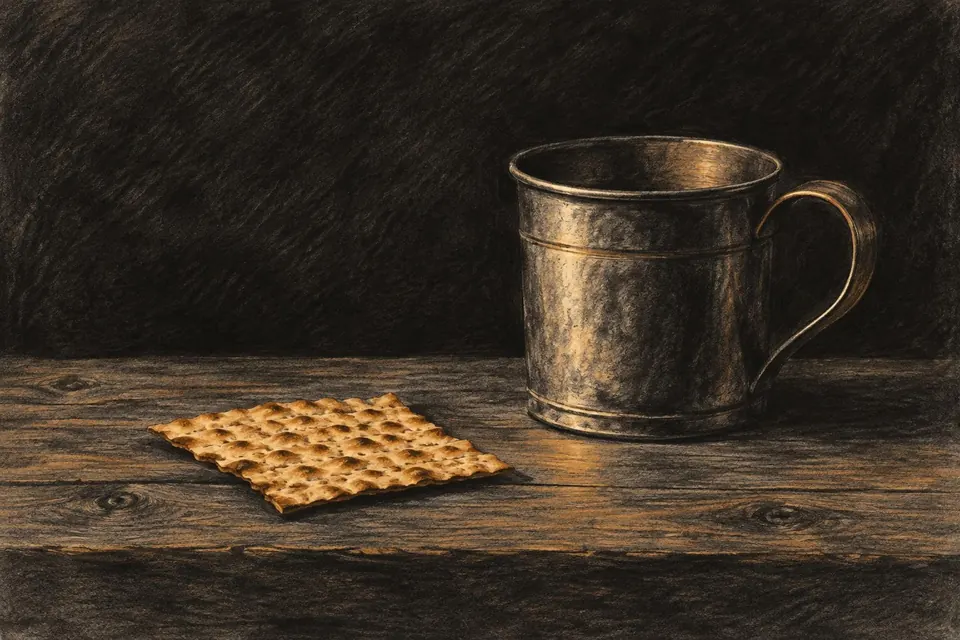
It is very important to make use of the unique qualities of these days. The Sages teach us: “Who is a fool? One who loses everything given to them” (Chagigah 4a). On Passover, Heaven gives us powerful tools: matzah, maror (bitter herbs), four cups of wine, karpas (a vegetable dipped at the Seder), and charoset (a Seder mixture). We must not let them slip through our own hands.
Apparently, we really do need such powerful tools to rebuild ourselves. Just as patients come to understand their true condition when they see the many instruments prepared for them in the operating room, we too must believe and recognize that these days hold the power of complete renewal. Through effort and proper preparation, we can become completely new people.
Keep reading
More →Passover Wine: What to Drink at the Seder
The four cups are a central part of the Seder, and grape juice can be used when wine is difficult to drink.
Guide · PassoverWhat Goes on a Seder Plate?
- 1. Zeroa
- 2. Beitzah
- 3. Maror
How Did the Klausenburger Rebbe Find Matzah in a Nazi Camp?